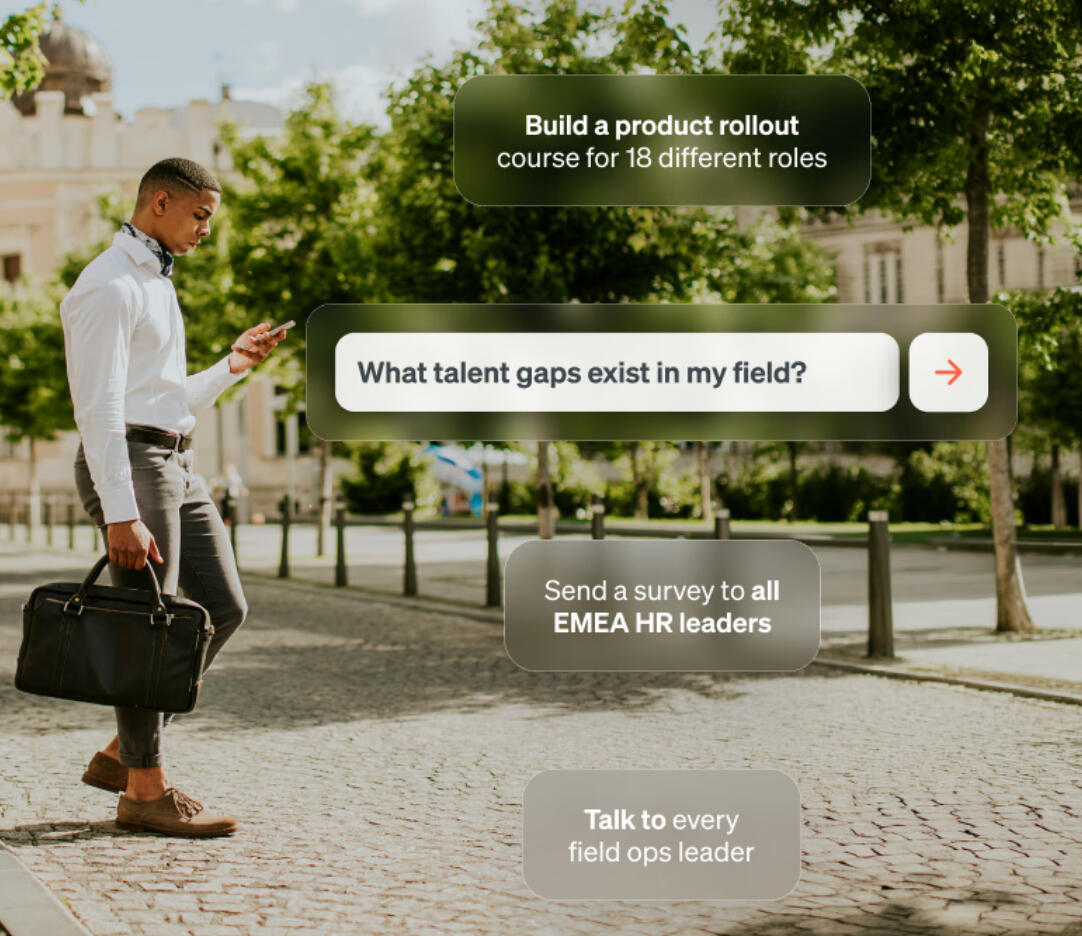
Hi I'm Katy — a product marketer and builder.I lead product marketing at Arist, where we build research tools with decision-grade AI to help Fortune 500 companies solve their toughest business problems.I turn customer insight into product direction, positioning, and launches; especially for emerging technologies that need to earn trust before they can be adopted.
scroll to see my work ↓
Arist
2026 - Present | Product Marketing Lead
Leading product marketing, brand, and GTM for Arist’s AI product suite, including positioning, launches, and sales enablement for Fortune 500 deals.
Doormat Trading Terminal
2024 - 2025 | FOUNDING PRODUCT DESIGNER
Built a self-custody fintech trading platform and creator-driven marketplace for automated strategies.
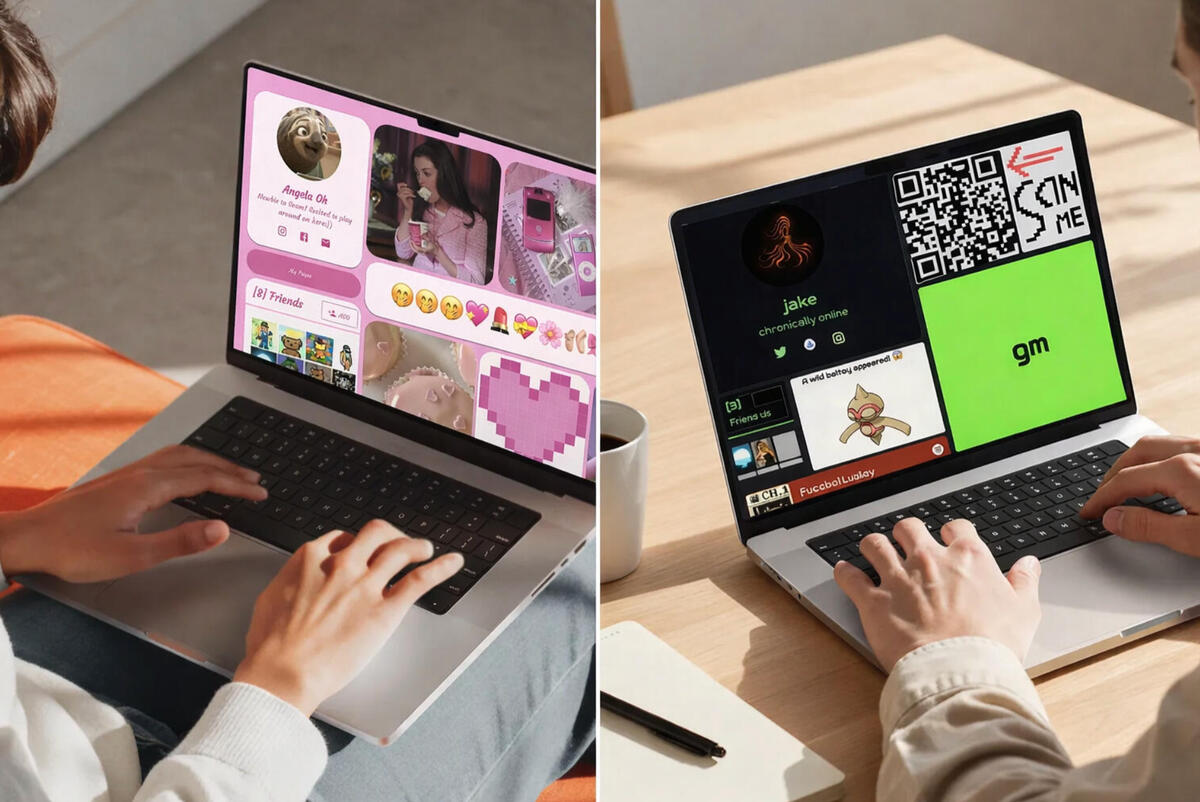
Seam Social
2021-2023 | CO-FOUNDER, PRODUCT DESIGN
Built a social platform and mini-app SDK from 0→1; led GTM that drove adoption within Pixels, then the largest blockchain game by daily active users.
Taste the City
2023-PRESENT | PRODUCT & GTM ADVISOR
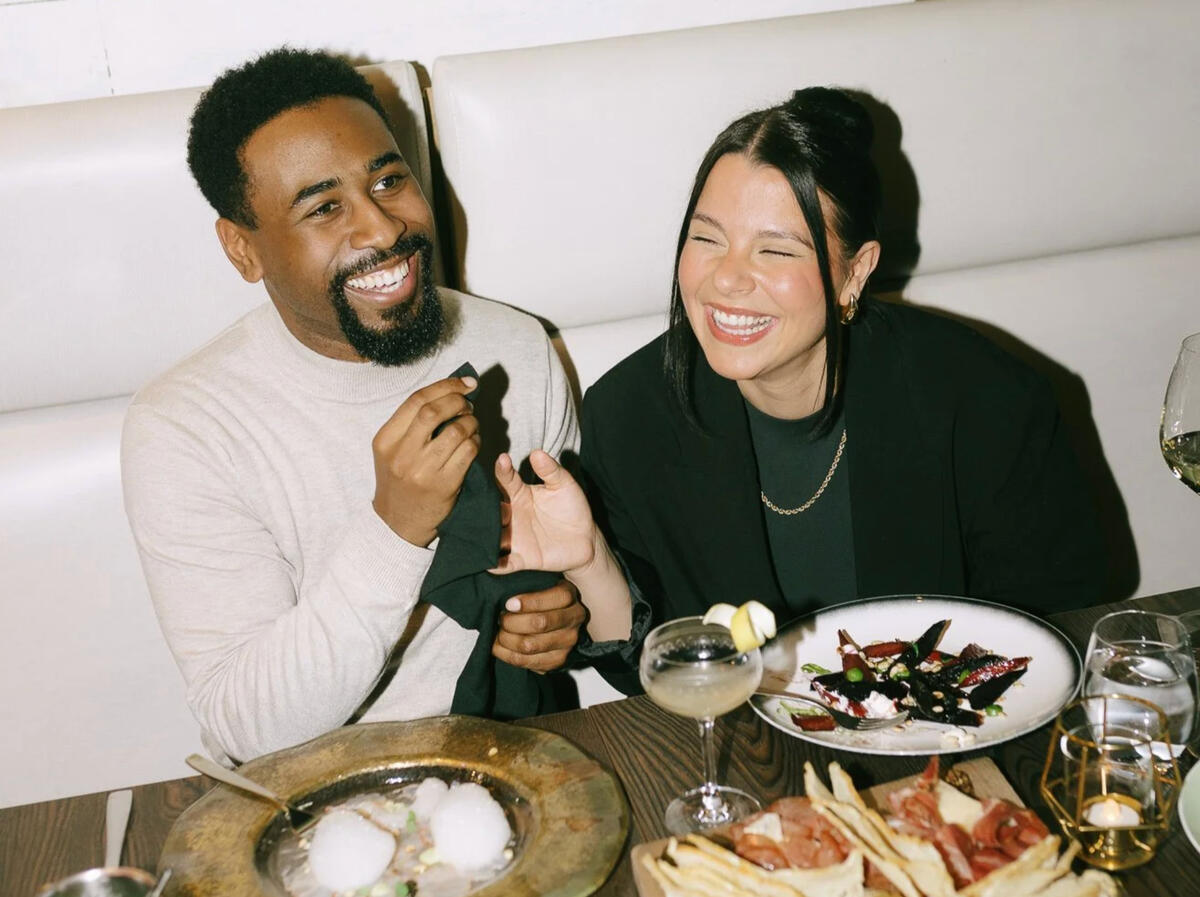
Support customer research, product development, positioning, and GTM for an SMS-guided food-tour platform.
Mailchimp
2020 | PRODUCT DESIGNER NDA
Part of an agency team extending Mailchimp’s Wink design system into an internal tool that scaled creative implementation beyond components.
Notes
This is where I write notes about things I've noticed, built, or thought about recently.
Control Issues
User Agency in the AI Era
NOTICE

Shape of Design
Beautiful skill mapping
BUILD
Field Notes
Travel Scrapbook
BUILD
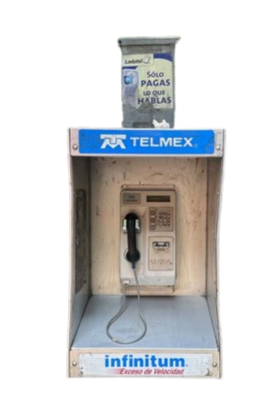
Craft Culture: Mexico City
"Food delivery is for touristas"
NOTICE
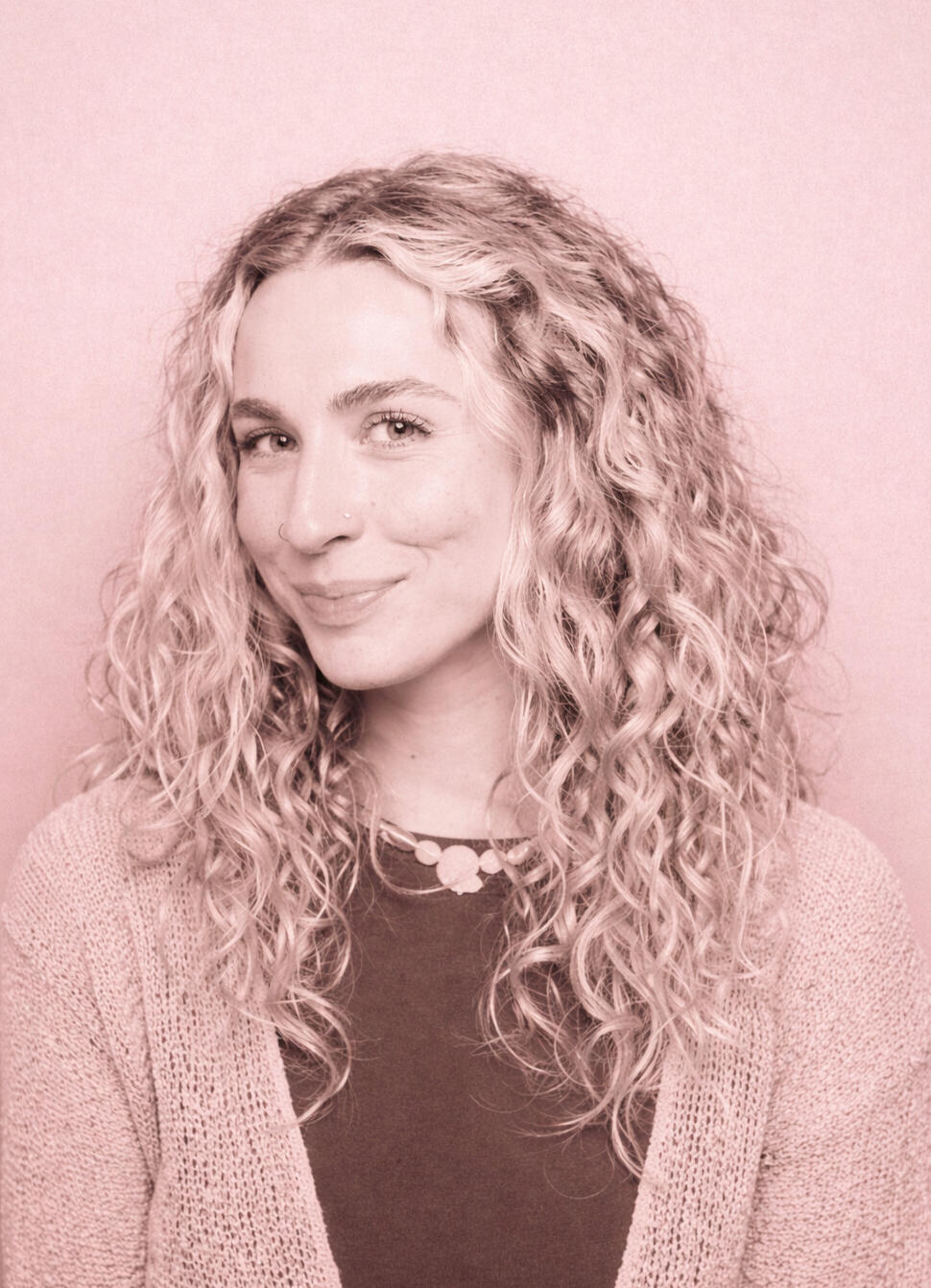
A bit about me
I work at the intersection of product, market, and story.My background spans product design, founding, and GTM across AI, fintech, consumer social, and healthtech. This range has taught me that positioning is more than perfecting language. It starts with understanding a customer’s reality, making difficult product decisions, and building artifacts that make new ideas legible.At Arist, I work across brand, positioning, prototyping, and GTM for a new kind of AI product for enterprise teams. I’m especially interested in what it takes to introduce AI to people who are not early adopters.What I love most about software is that there is no final version. Products evolve with culture, market cycles, and new technology. Most AI discourse is written for builders; I’m interested in the trust, clarity, and adoption problems for everyone else.Offline I like pottery, bricking my phone to finish a good book and surfing. Always open to chat or (ideally) make something cool together, if that sounds fun please reach out.
KIND WORDS
Katy is my ideal product-thinking partner. She balances strong vision with pragmatism and takes the time to understand how systems work end to end. She holds risk management and creative exploration together, leading not just iterative improvements but qualitative redesigns based on what users actually want to do.She is curious, detail-oriented, and genuinely invested in improving both the product and the people around her.
Abe Kim
SOFTWARE ENGINEER, LEGEND TRADING
From our first conversation, Katy has challenged our thinking and pushed us to identify and focus in on the highest leverage growth motions. She created a cadence for stepping back and planning strategically, turning creative instincts into tangible plans we could communicate and execute faster.Her commitment to craft raised the bar across product, brand, and growth.
Joanna Pariseau
FOUNDER & CEO, TASTE THE CITY
The redesign Katy led elevated our product in a way that immediately resonated with our community. She did extensive user research to take our product suite from 0→1, and the brand and visual direction finally felt aligned with who we are.Her ambition, clarity, and sense of urgency pushed the entire team to move faster and aim higher.
Trevor Aron
FOUNDER & CTO, DOORMAT
SIDE PROJECTS
| Reply Girls Podcast | 200k impressions, 500+ collectors | Pods, Youtube |
| Cookbook | 3rd Place, ETH NYC Hackathon (Mantle) | Github |
| Fitcheck iMessage App | Hit #7 in App Store | Archived |
| Common Wallet | 1st Place, Sozu Haus x Climate Hackathon | Website |
| Port Protocol | 1st Place, ETH CC Hackathon (IPFS) | Devpost |
| Seam v1 | Top 5 Finalist, Miami Hack Week | Devpost |
| Friend of the Week | Awarded an Editorial Grant | Archived |
| Moss & Friends Podcast | Hosted 20+ VC-backed healthcare founders | Spotify |
| Alberta Adventures | Top 5, Calgary Open Data Hackathon | Archived |
Mailchimp
Product Designer (Agency) • 2020
I worked on an internal initiative supporting Mailchimp’s Wink design system as part of an agency team assembled by Superfriendly. We partnered with brand and product stakeholders to explore how Wink could scale a shared system beyond components.
How do you scale a design system beyond components into shared creative infrastructure?
MY role
Led visual direction and structural models for the internal platform
Translated existing brand systems into scalable interface and IA patterns
Prototyped exploratory concepts and aligned cross-functional stakeholders
This is a high-level overview of work completed under an NDA, feel free to reach out for more details.
Constraints
Wink was recently launched, so this initiative focused on extension and adoption. The platform needed to support cross-functional alignment and help Peeps (the name for Mailchimp teammates) feel more inspired and connected creatively.
Dozens of cross-functional stakeholders weighed in as our client
Internal-only platform consolidating several existing platforms
Shifting directives meant we had to re-earn alignment repeatedly while still pushing the work forward
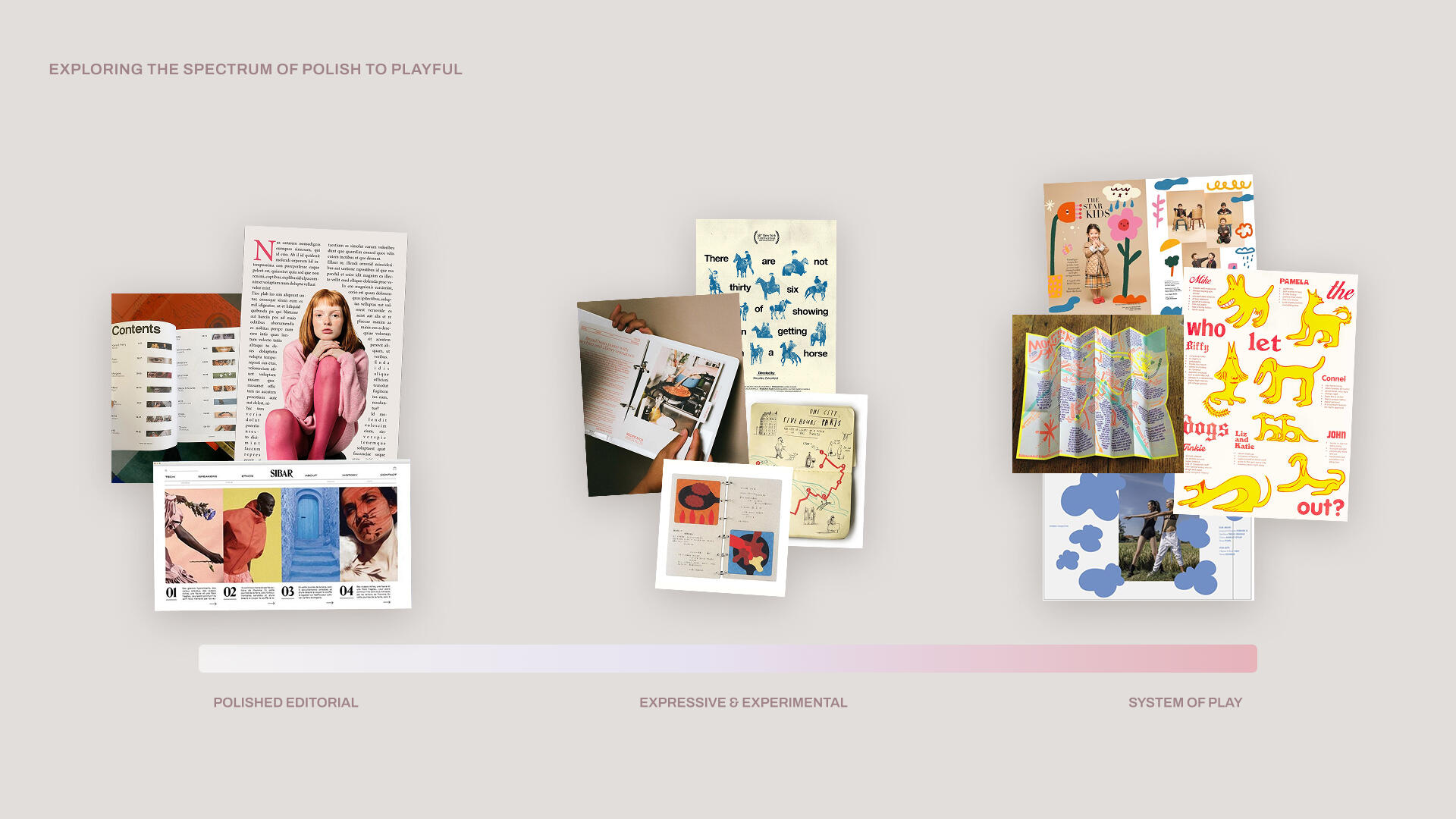
Moodboarding the spectrum from editorial polish to system of play
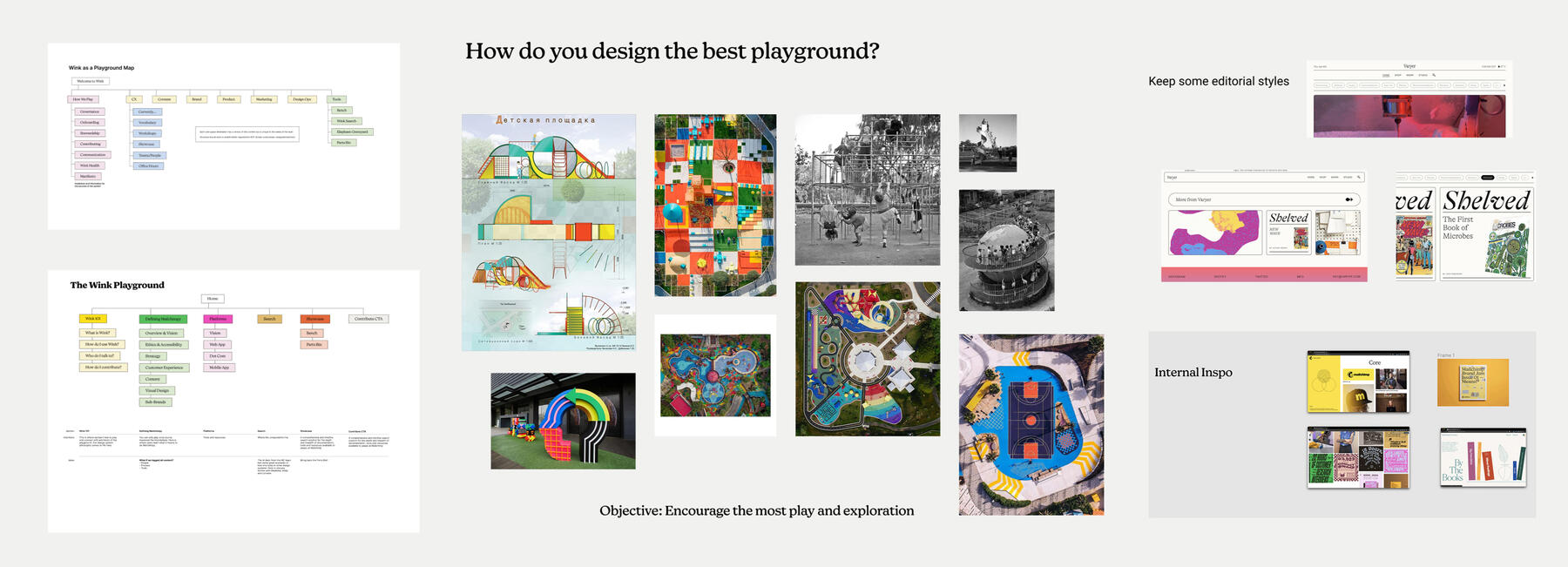
Exploring IA and design references for the playground framework
Explorations
Reframing “Mailchimp-y” as a Playground
Mailchimp’s internal documentation leaned editorial. We explored a broader spectrum of expression and pushed toward a playground model instead of a static reference site. The goal was to create a digital space that invited participation and experimentation rather than prescribing how Mailchimp designs.During remote work in COVID, teams had lost in-office creative exchange. The platform aimed to reintroduce shared exploration in a structured environment.Once stakeholders saw that prototypes, archives, rejected directions, and system fundamentals could live in one place, they began referencing the Playground model in planning discussions.
Making exploration reusable with the Parts Bin
One concept I explored was the Parts Bin, a creative archive for ideas that did not ship but still carried value. We wanted to treat exploration as cumulative rather than disposable, enabling teams to trace creative lineage, rediscover alternate directions, and reuse thinking across the org.
How might we offer enough context to spark new ideas?
Instead of letting explorations disappear as projects evolved, we proposed preserving them with context including authorship, artifacts, timestamps, and notes on why the direction paused. Automatically generated tags kept the work searchable and allowed teams to extend context over time.I explored two important aspects of this idea: discoverability and shared context. Mailchimp folks would only be excited to draw from these "spare parts" and abandoned ideas if they understood where they had come from and why.
Outcome
The engagement ended before implementation, but the Playground model was adopted into stakeholder planning discussions. It clarified how Wink could evolve beyond components into shared infrastructure.It established a model for thinking about design systems as a living system rather than static documentation.
Reflection
Design systems scale with interpretation and support from internal culture. The most valuable work was not defining new components, but designing a space where teams could explore, learn, and align within shared constraints.
Taste the City
Advisor, Product Design • 2023-2026
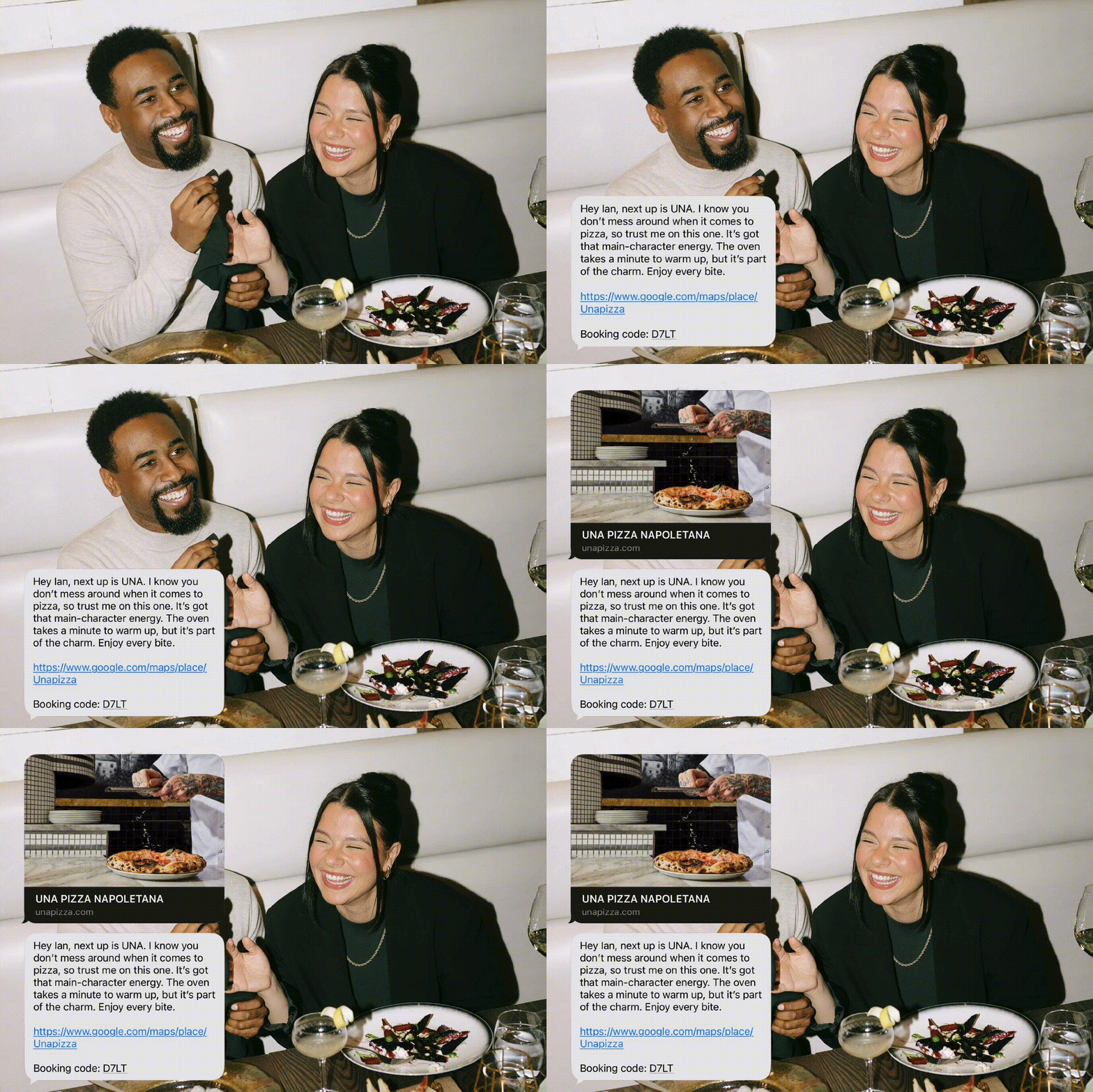
Taste the City is a hospitality marketplace connecting restaurants, curators, and diners through SMS-guided food tours. Content creators curate routes to monetize their recommendations, users book surprise tasting tours, and restaurants get free exposure to new customers.When I started working with the team, their product was already live in over 100 restaurants across Canada and they were generating strong traffic from their social content, but sales lagged. The team was preparing to fundraise and needed to improve conversion using their existing MVP.
What makes people excited (not anxious) when they pay in advance for a surprise tasting experience?
Challenge
The UX wasn’t smooth, so users dropped off while browsing routes and during booking. Visual hierarchy was inconsistent, imagery was deprioritized, and routes lacked enough context to build trust. The website UX didn’t match the premium pricing.
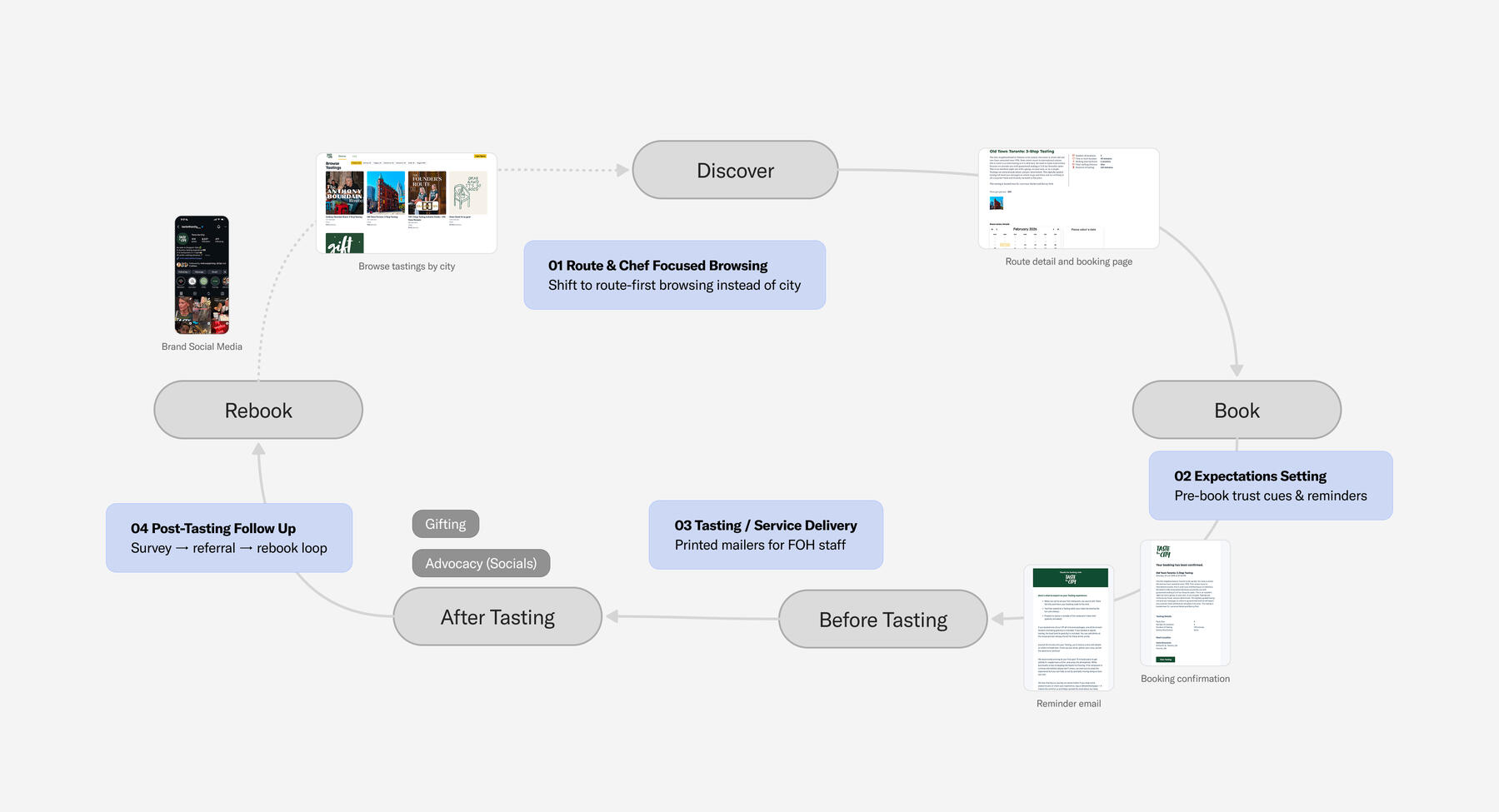
Mapped the end-to-end lifecycle to find the highest leverage opportunities to improve conversion and retention
FOCUS AREAS
I focused on clarifying value, tightening the booking journey, and improving conversion within the existing MVP’s technical constraints.
1. Route-First Browsing
Shifted from city-first navigation to route-first browsing to reduce cognitive load and make curated experiences easier to compare.2. Trust & Expectation Setting
Improved key touch-points and microcopy without introducing major engineering changes, balancing growth goals with MVP limitations.3. Partner Enablement
Created physical and digital touchpoints to reduce confusion, support onboarding, and protect the guest experience at scale.
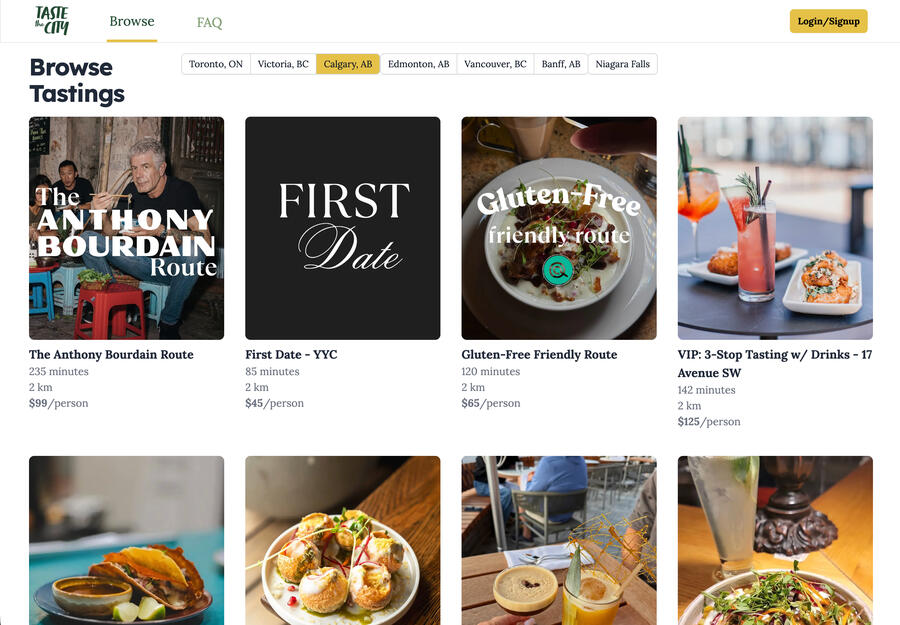
Original browsing experience
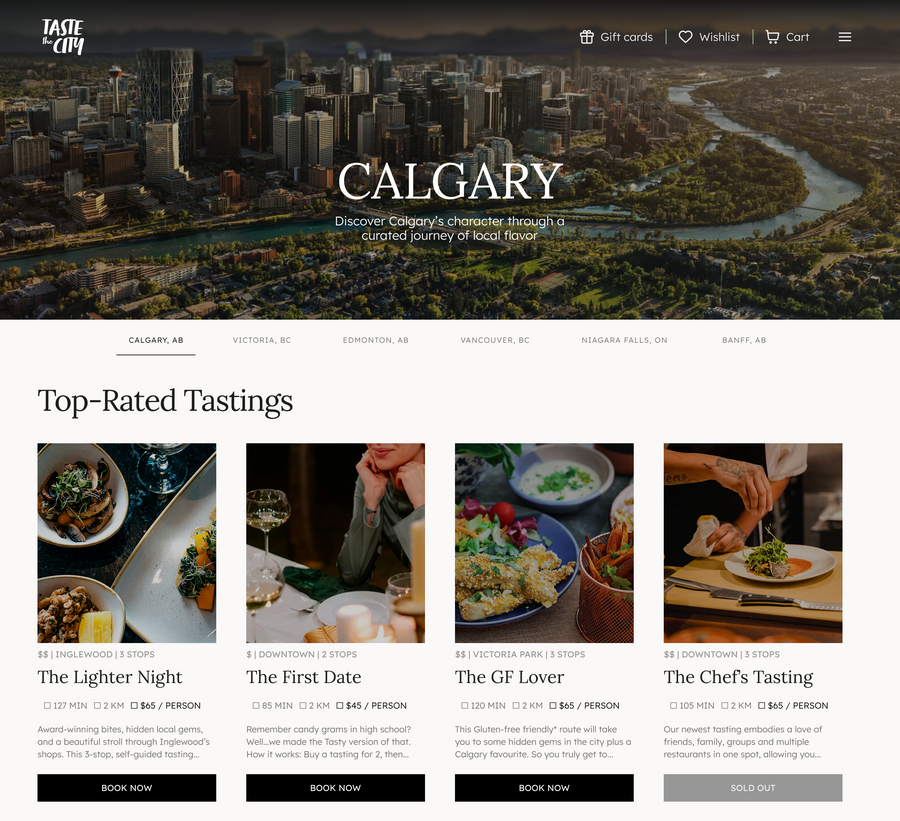
Editorial, blog-inspired redesign
From our first conversation, Katy has challenged our thinking and pushed us to identify and focus in on the highest leverage growth motions. She's also helped us set a cadence of stepping back to plan more strategically, turning our creative instincts into tangible plans we can communicate and execute faster.Her commitment to craft has pushed our work to a higher standard across product, brand, and growth.
Joanna Pariseau
FOUNDER, TASTE THE CITY
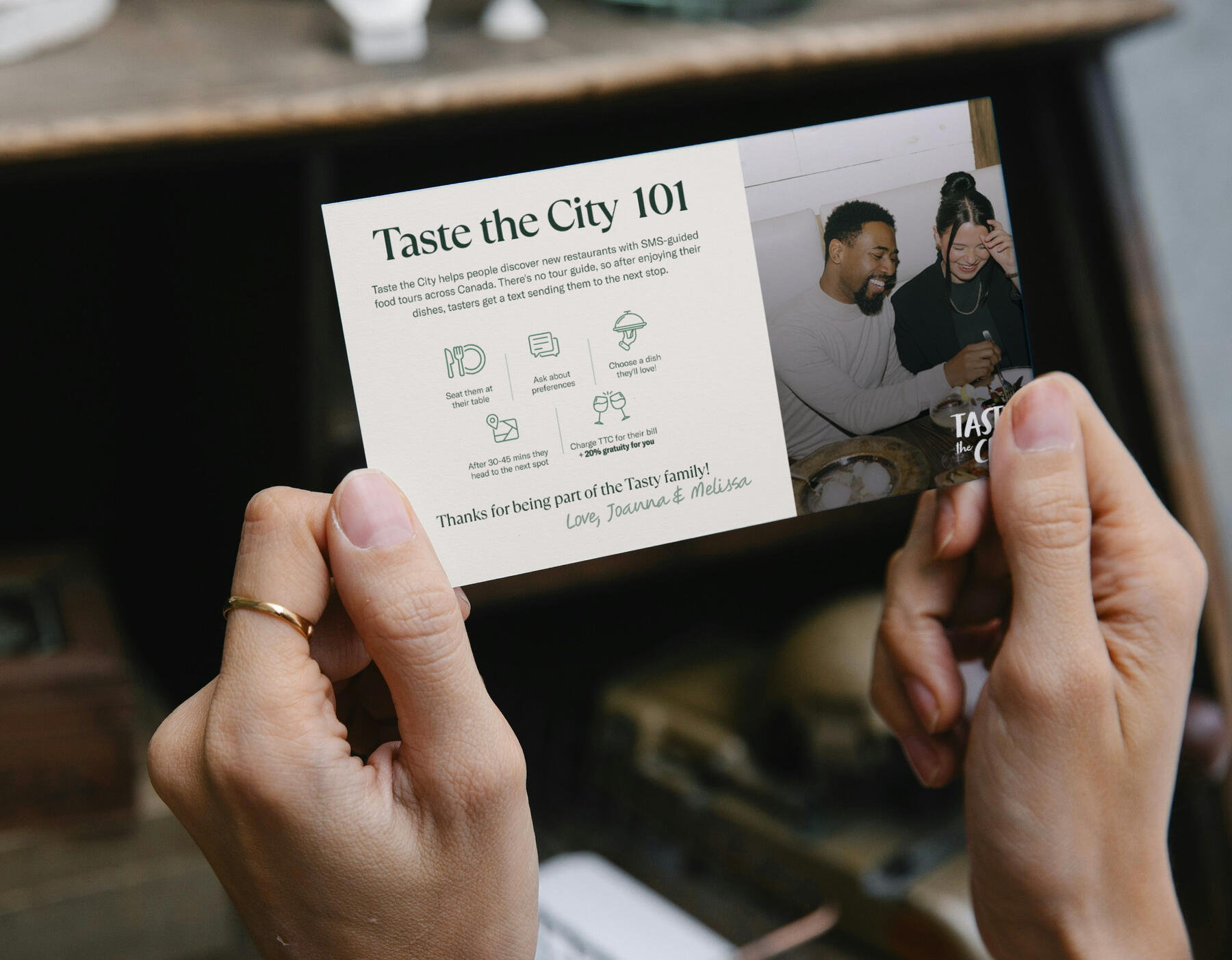
Created a simple printed guide so restaurant partners could confidently deliver the TTC experience
Outcomes
Reduced friction across browsing, booking, and service delivery through better expectation-setting, and sending printed mailers to restaurant partners
Improved product UX, increasing conversion by 13%
Refined key microcopy and touchpoints across the journey; redesign is in implementation and active user testing, with early signs of smoother booking and fewer interruptions
Seam Social
Co-founder & Design Lead • 2021-2023
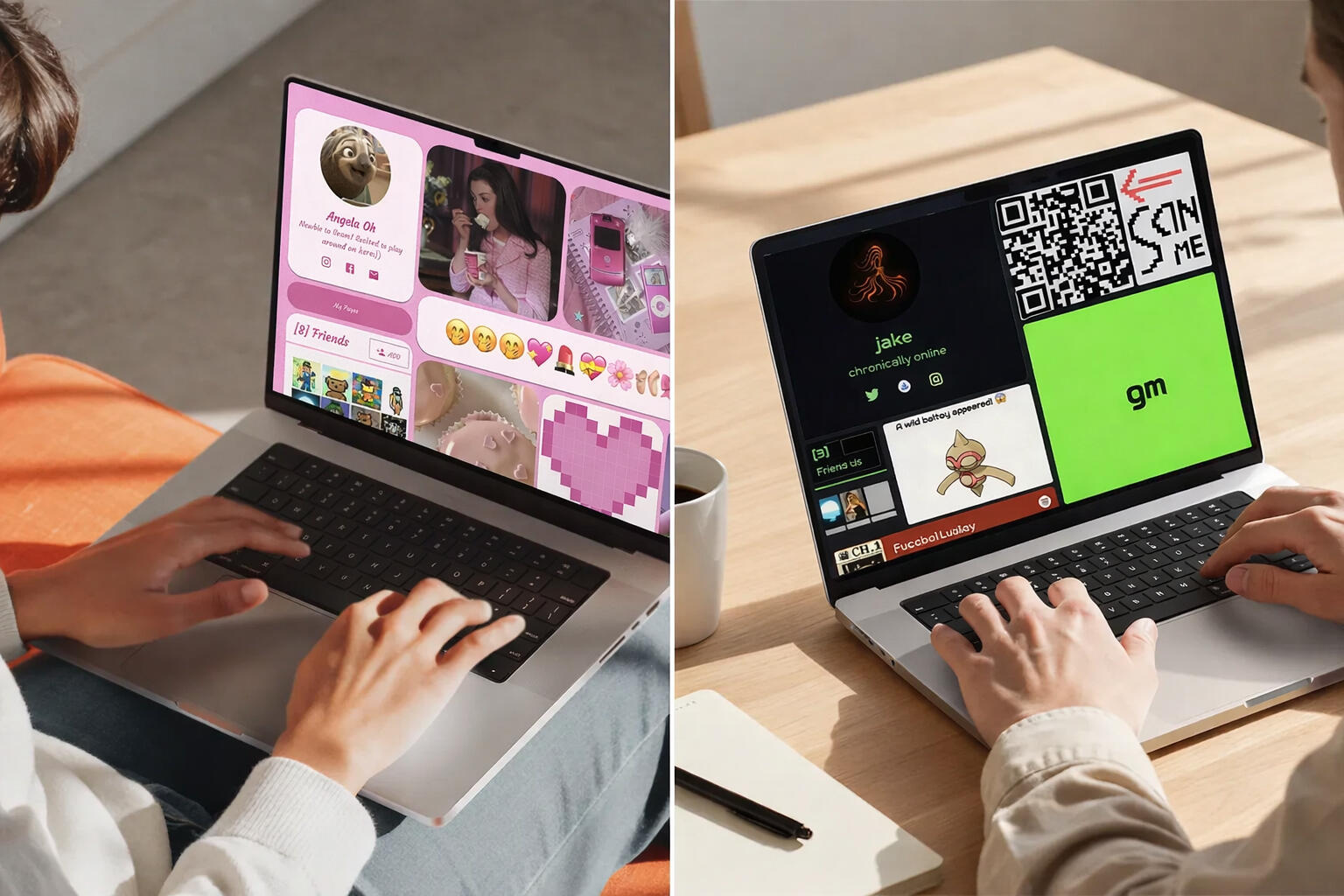
Seam Social is a customizable social platform and SDK that lets users extend identity across games and online communities.I designed the core product and mini app SDK, enabling users to create personalized mini apps, apply custom themes, and bring their social profile outside of the platform.
How might we hack the cold start problem and get distribution for a new type of social media profile?
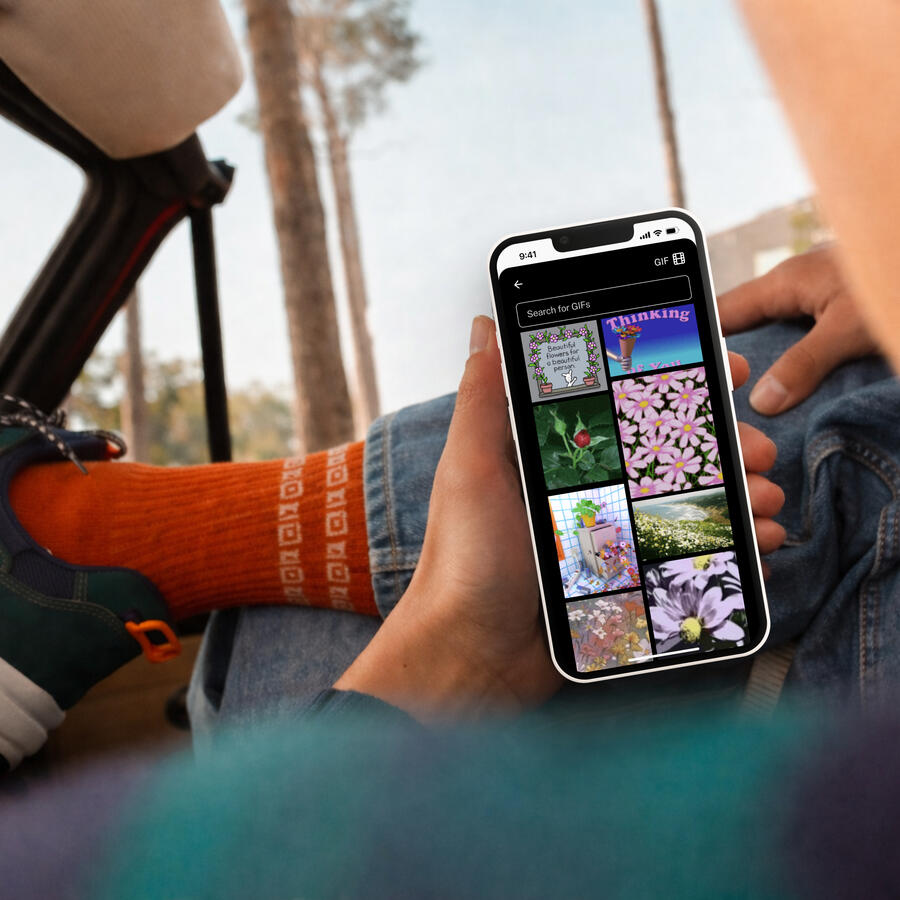
We launched our PWA using Privy
Loading animation
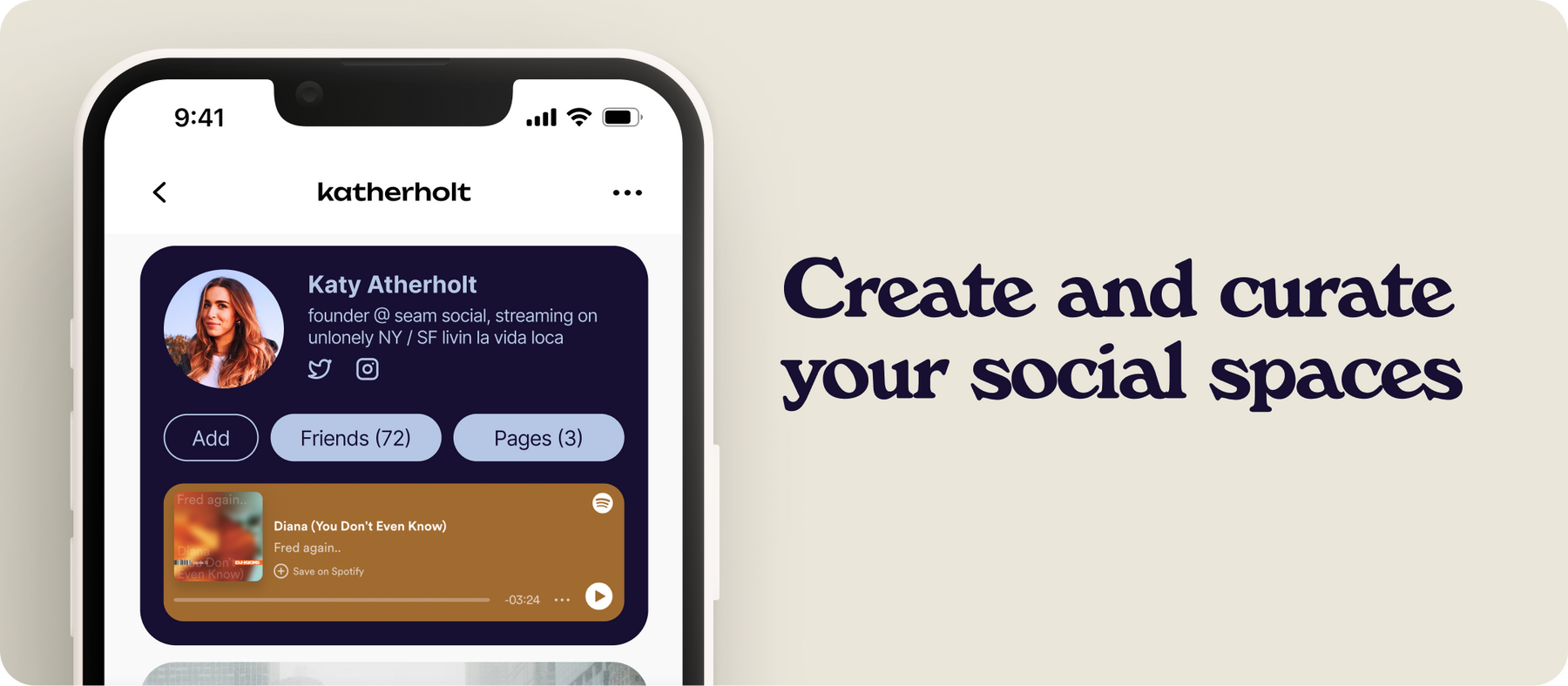
Introducing song selection during onboarding increased profile activation from ~35% to 90%.
CHALLENGE
Seam faced two cold-start problems: a standalone social platform without users, and an SDK without distribution to attract developers.Without users, developers had no reason to build. Without compelling features from developers, users had no reason to stay.
APPROACH
To address the cold start on both the platform and the SDK, I focused on distribution. We built a lightweight integration that embedded Seam profiles and mini-apps directly into Pixels, seeding real usage and attracting developers through a single high-signal launch.
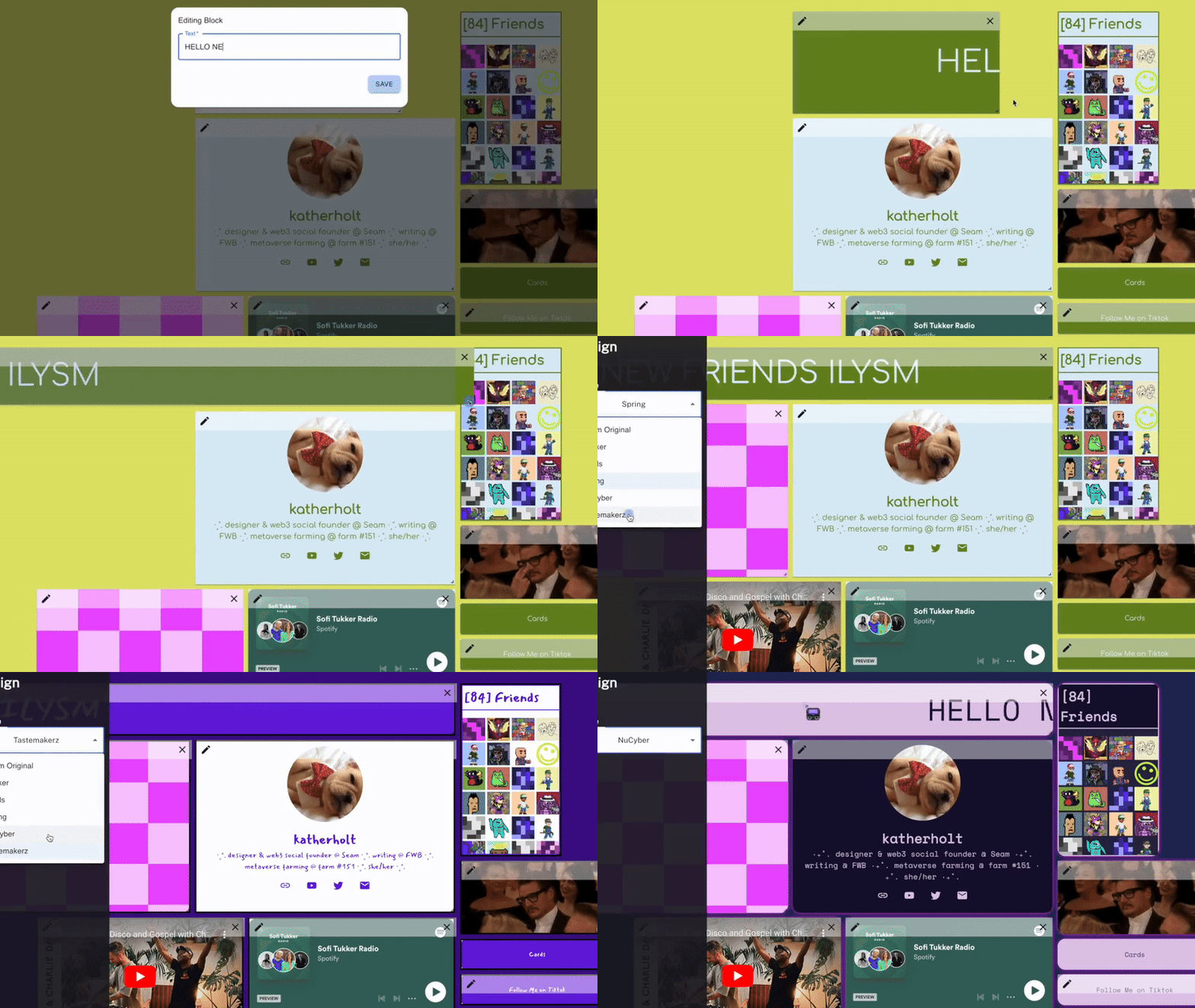
We created themes for different groups in the Pixels community
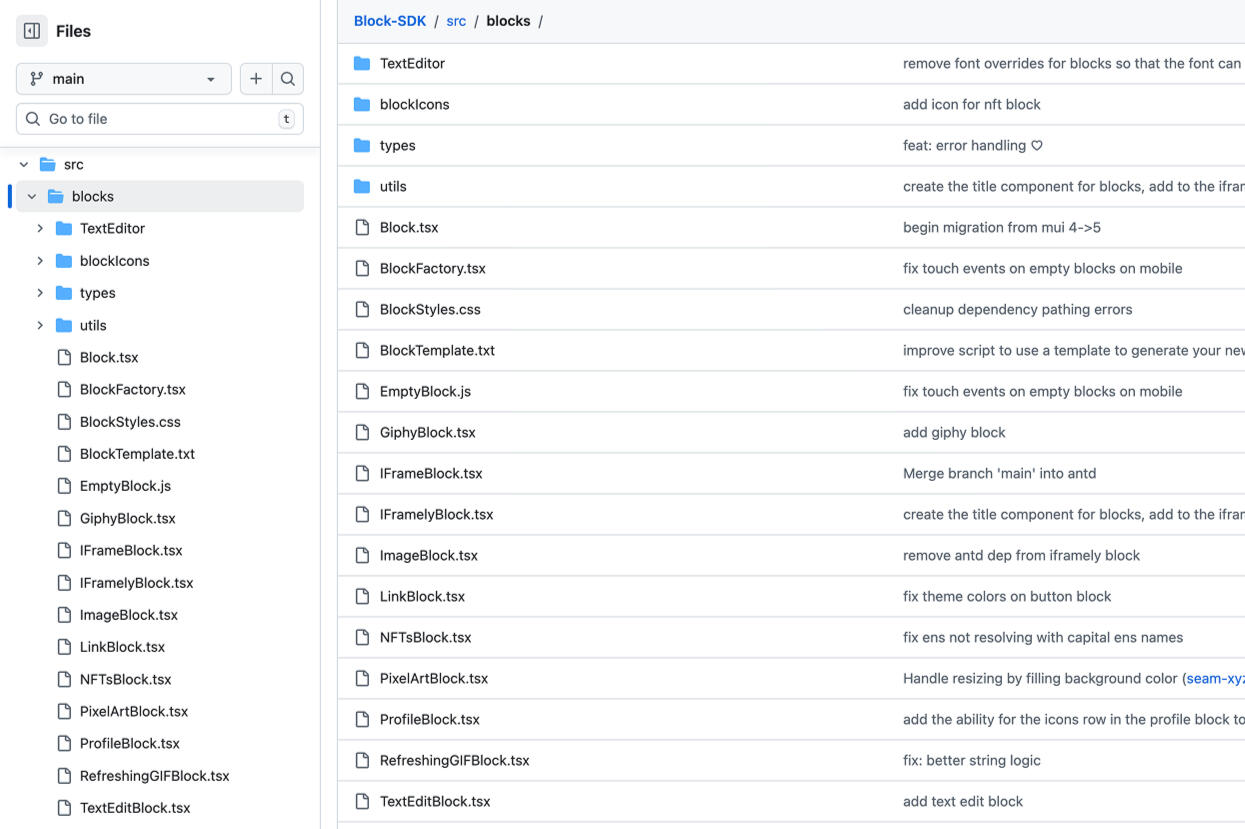
Open source mini app SDK
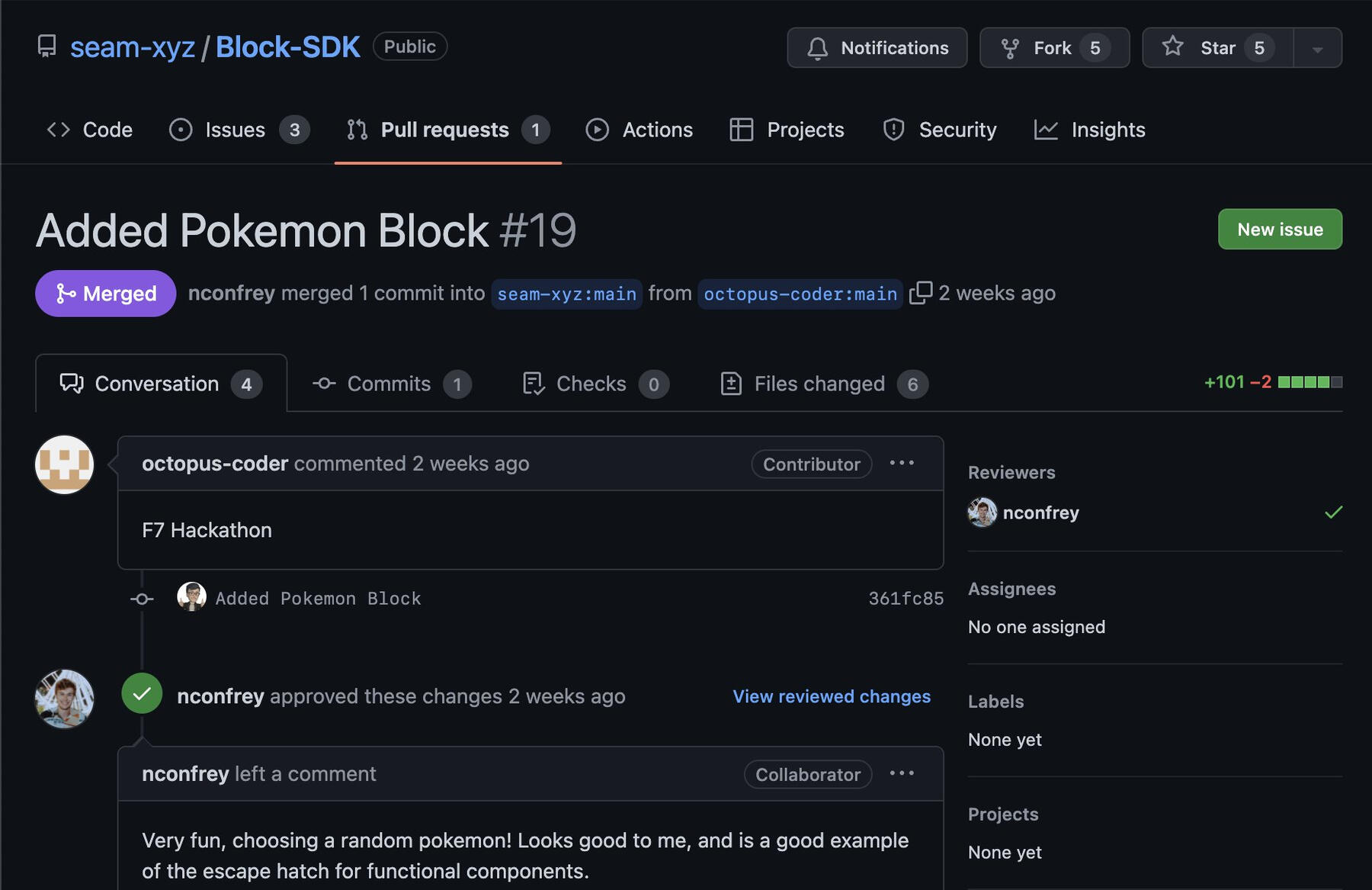
A user-built a Pokemon feature
OPPORTUNITY
Pixels is a top blockchain MMORPG with over 250k DAU ( at the time) and an active social layer, but lacked flexible in-game identity features. This made it an ideal environment to introduce Seam, where profiles could be immediately visible, useful, and socially legible.
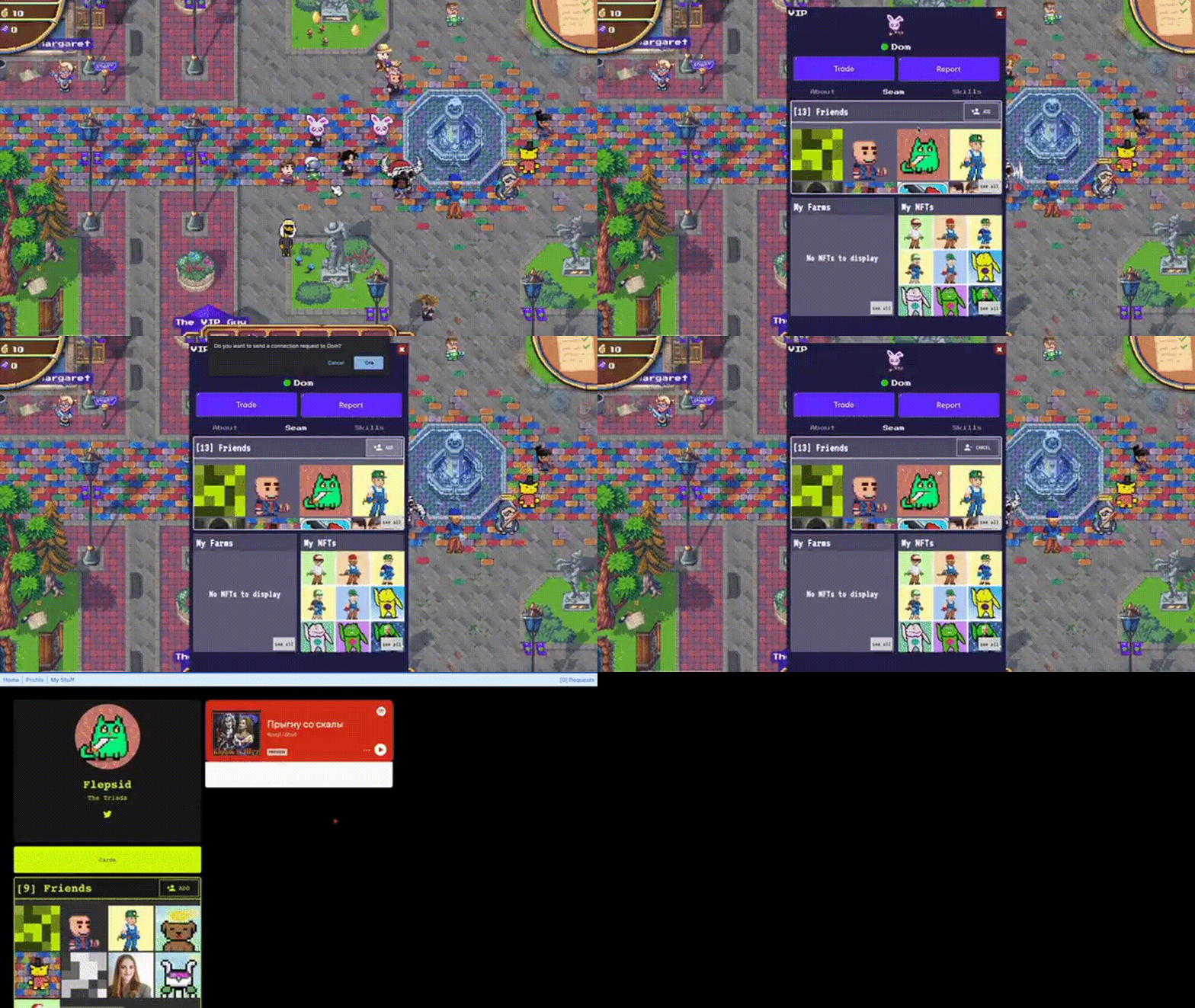
A user-built a Pokemon feature
Seam had an immediate 10x increase in DAU
Outcomes
Embedding Seam identity directly into Pixels was our strongest go-to-market outcome. The integration also served as a distribution channel for the SDK, leading 12 external developers to build custom features.
Reflection
This project reinforced that distribution-first design beats building standalone for niche products. Embedding Seam's identity into existing social environments through lightweight SDK integration validated demand and focused engineering effort on what actually mattered.
We created custom game objects to gift users with creative profiles
Quests were built into the platform to support onboarding and new feature releases
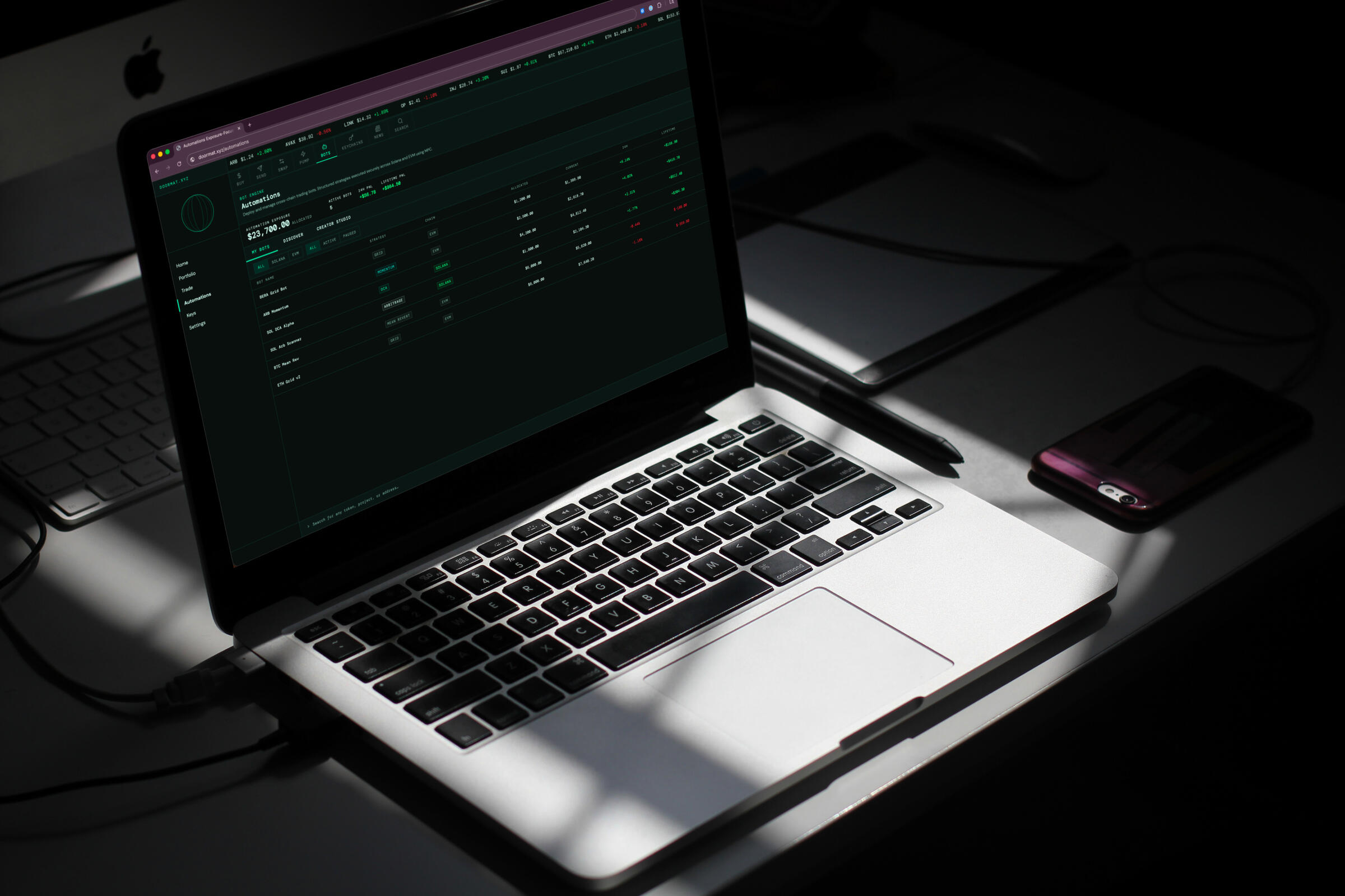
Doormat Trading Terminal
Founding Product Designer • 2024-2025
Doormat was an MPC-powered trading terminal across Solana and EVM. In late 2024, automation lived primarily inside Telegram bots that required users to give up custody.We explored how to bring automation inside a self-custodial wallet without sacrificing control, clarity, or distribution.
What if traders could deploy automated strategies across chains without giving up custody or relying on insecure third-party tools?
INITIAL RESEARCH
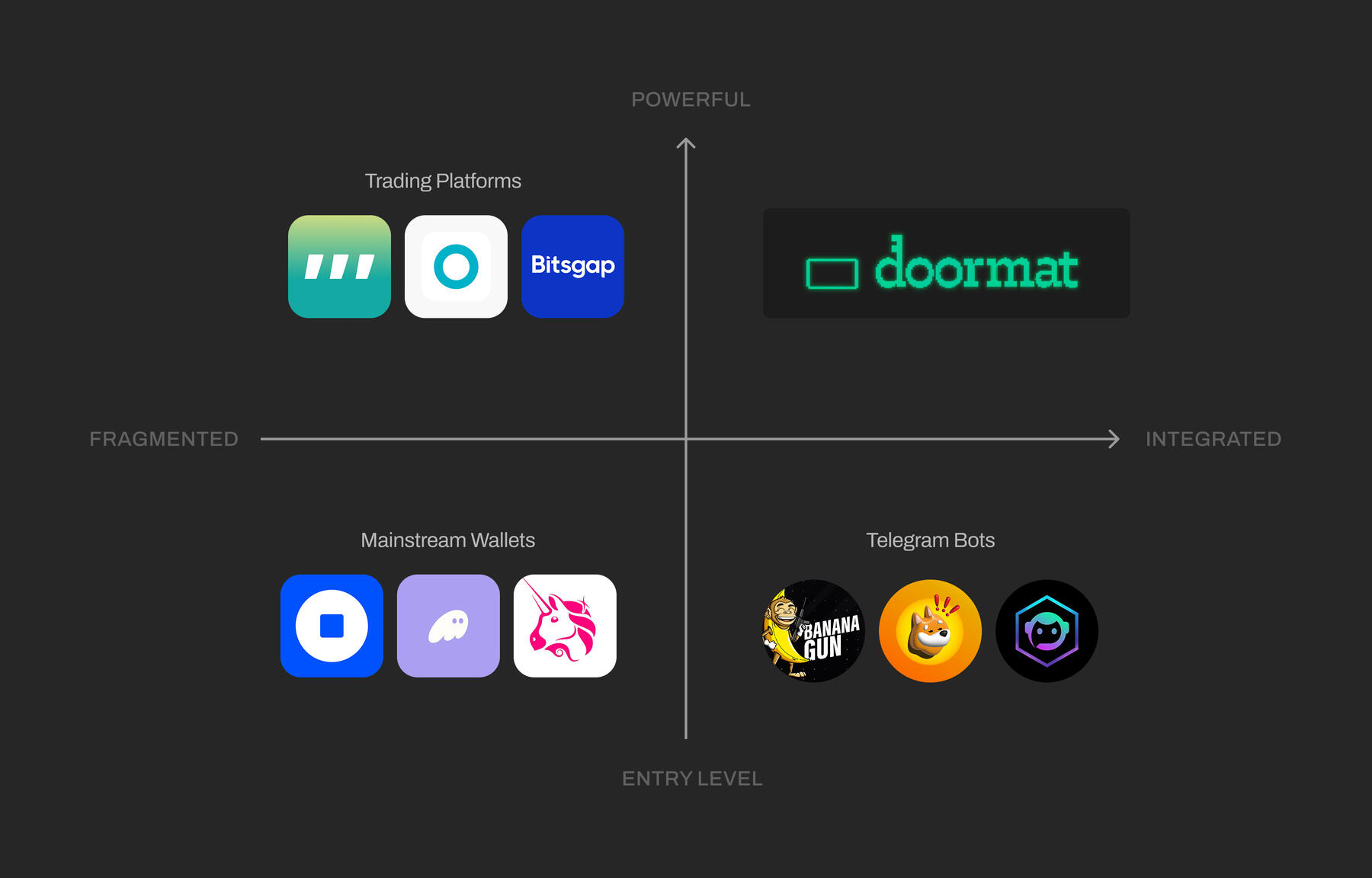
Automation already existed but it was either: Powerful and centralized (web-based trading dashboards) or consumer and opaque (Telegram bots).Telegram bots optimized for speed and virality but required users to give up custody and trust black-box systems. Web dashboards offered more flexibility but assumed exchange accounts and fragmented capital across wallets.Doormat’s differentiator was self-custody and consumer-style product with powerful trading features already integrated.
Katy owned the end-to-end design of our automations feature, pushing for the opportunity to more deeply integrate the actions we saw users leaving doormat to take. She partnered closely with engineering and codesign partners, iterated quickly in beta, and consistently pushed the team to make principled scope decisions. Her leadership brought both depth and speed to one of our most ambitious features.
Trevor Aron
FOUNDER, DOORMAT
Research
We worked closely with 25 beta power users to validate demand for automations and recruited 5 KOLs as design partners. These were traders actively sharing strategies with communities on Twitter and Telegram.In parallel, we analyzed Banana Gun, Trojan, and web-based automation platforms. Users were already running recurring strategies and sharing them publicly. What they lacked was a secure, legible system to discover, deploy, and manage them.This shifted our focus from building “better bots” to designing a marketplace with trust and distribution built in.
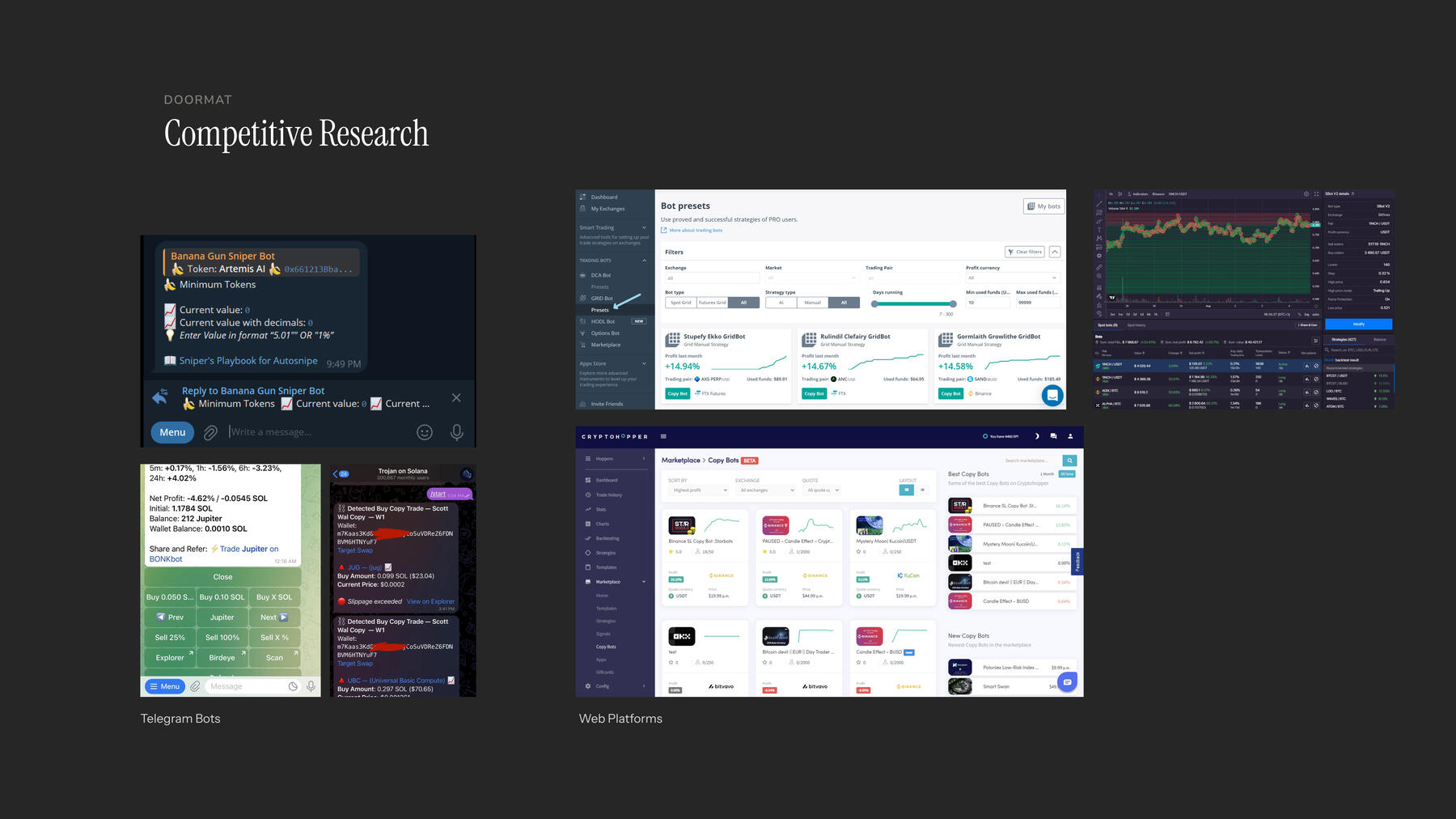
As we prepared to come out of beta we realized that strategy promotion would become very valuable as more traders listed their work
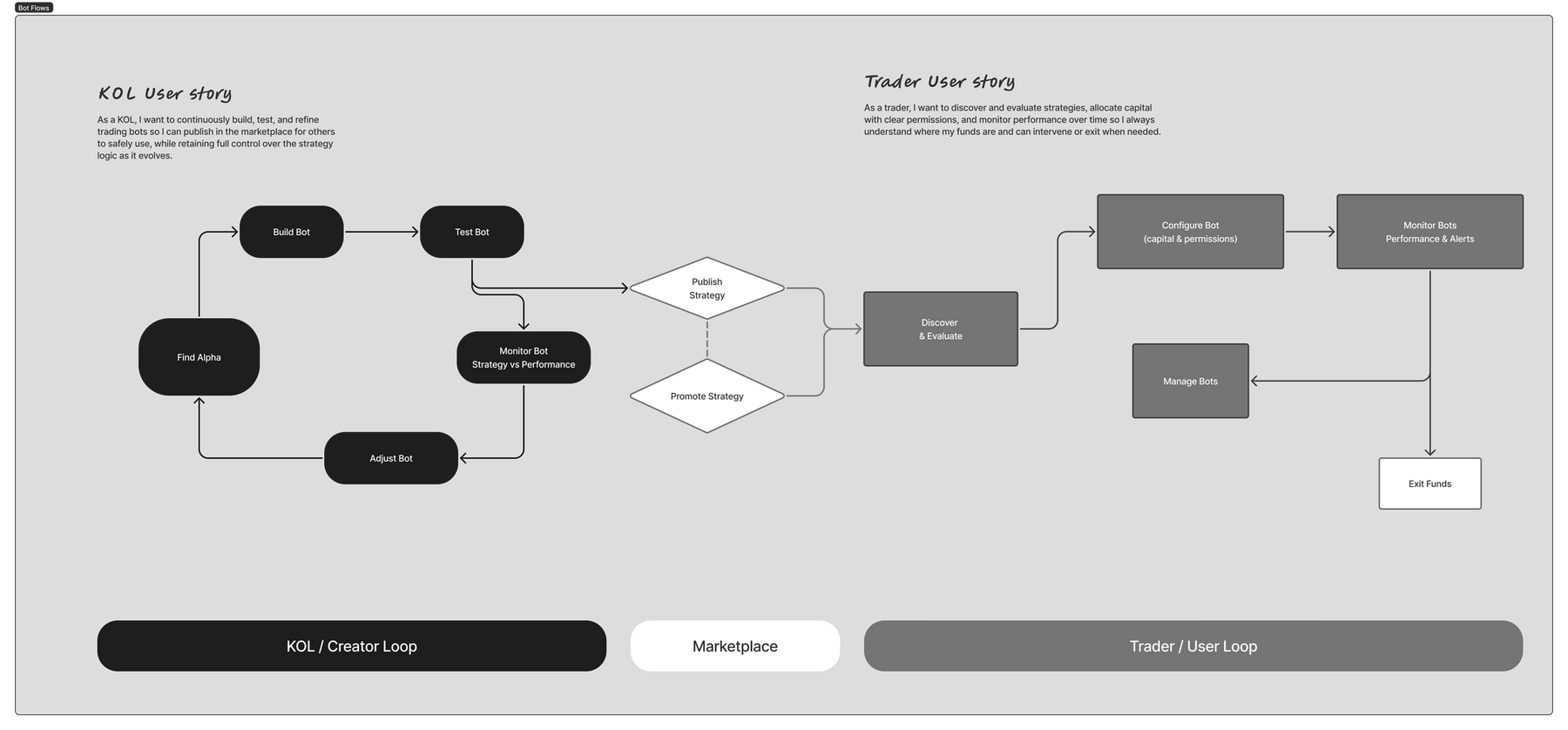
MAPPING THE SYSTEM
Designing this marketplace meant aligning two interconnected loops simultaneously.The creator loop: build → test → publish → iterate.
The trader loop: discover → allocate → monitor → intervene → exit.This clarified that a bot wasn’t just executing on logic, it could cover capital allocation, monitoring, and risk management.
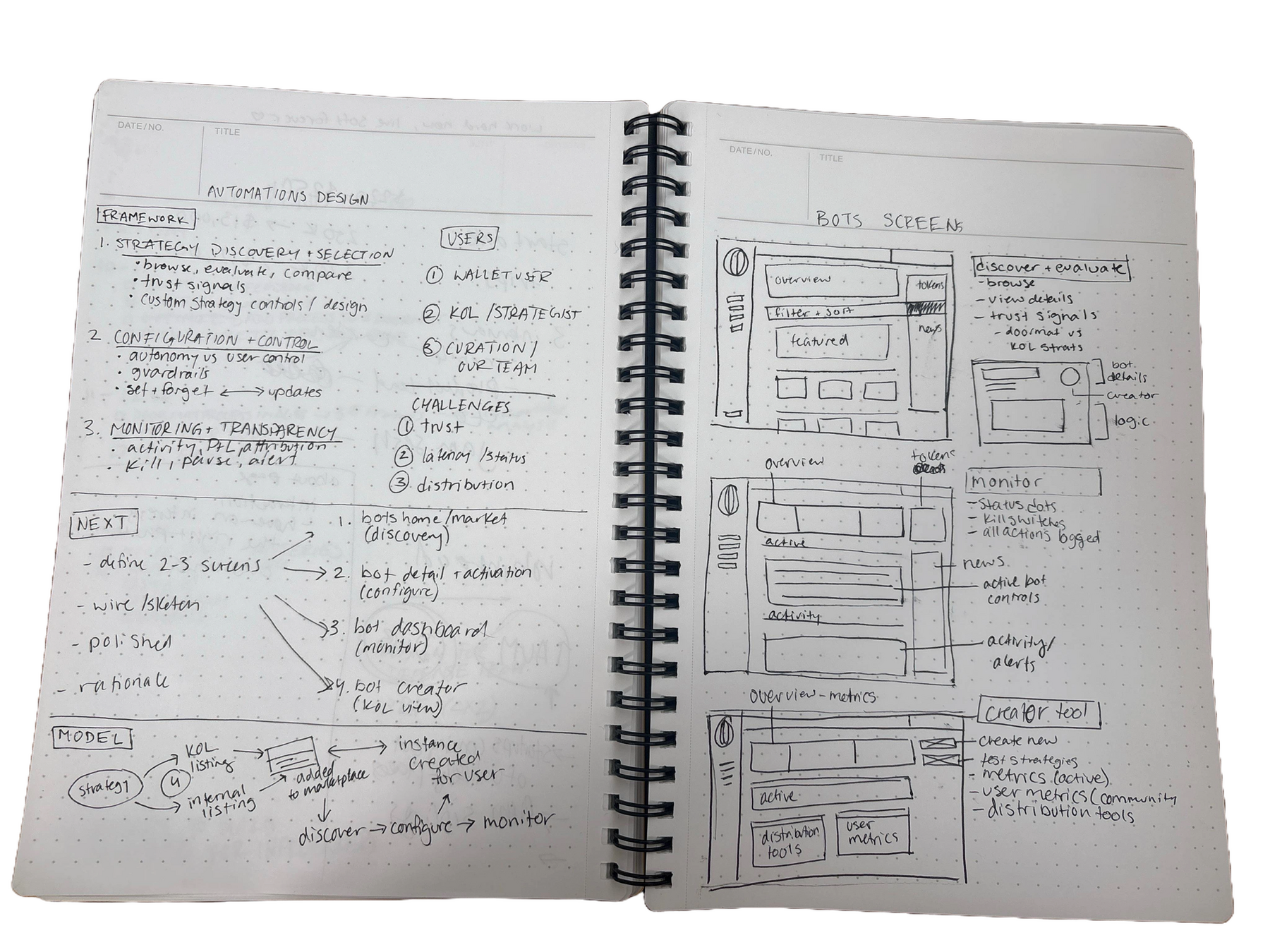
We saw automation as a lifecycle: Discover → Configure → Deploy → Monitor.
CORE CONSTRAINTS
Three trust problems emerged simultaneously. Users needed confidence that automation did not compromise custody. They needed real-time visibility into exposure and status. And creators needed safeguards so publishing a strategy wouldn’t expose their community to undue risk.This shaped the information architecture more than any visual decision.
Custody integrity: automation could not compromise user control.
Real-time visibility: users needed clear exposure and instant intervention.
Creator safeguard: publishing strategies required structured risk boundaries.
INFORMATION ARCHITECTURE
We structured the feature into three primary states.Overview: What is my total exposure?
Discovery: Which strategies do I trust and why?
Management: What can I change or stop immediately?This structure directly mapped to the system loops and trust constraints. Rather than building a complex configuration dashboard, we prioritized clarity of capital allocation, status visibility, and decisive intervention controls.
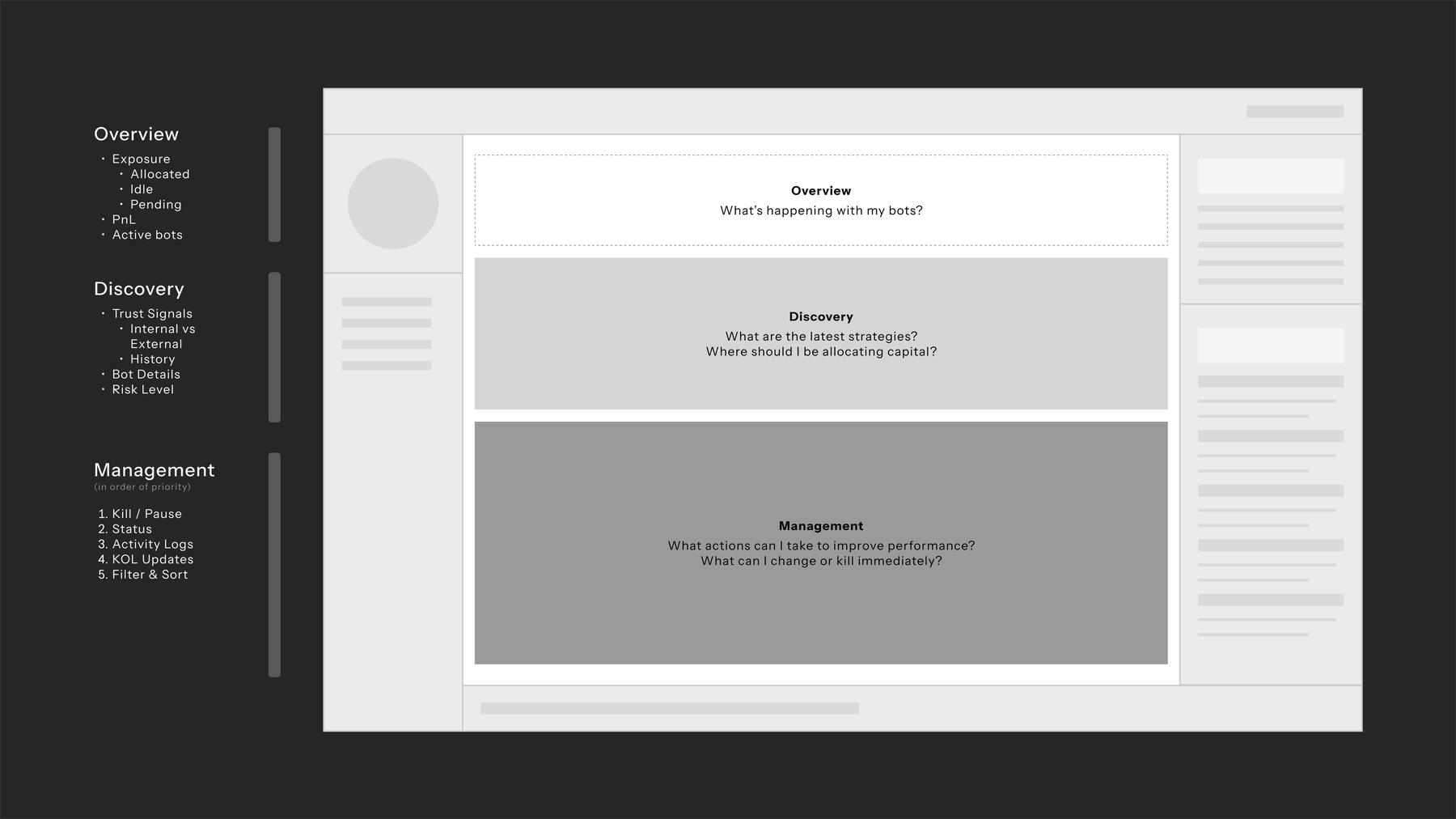
I really love whiteboards and how easily they invite non-designers and non-technical team members into the design process
v1 → V2 Evolution
v1 focused on secure execution and basic deployment in private beta.
v2 expanded monitoring and management controls, making exposure and bot status more legible.I began designing v3 around deeper creator economics and marketplace mechanics when the company was acquired.
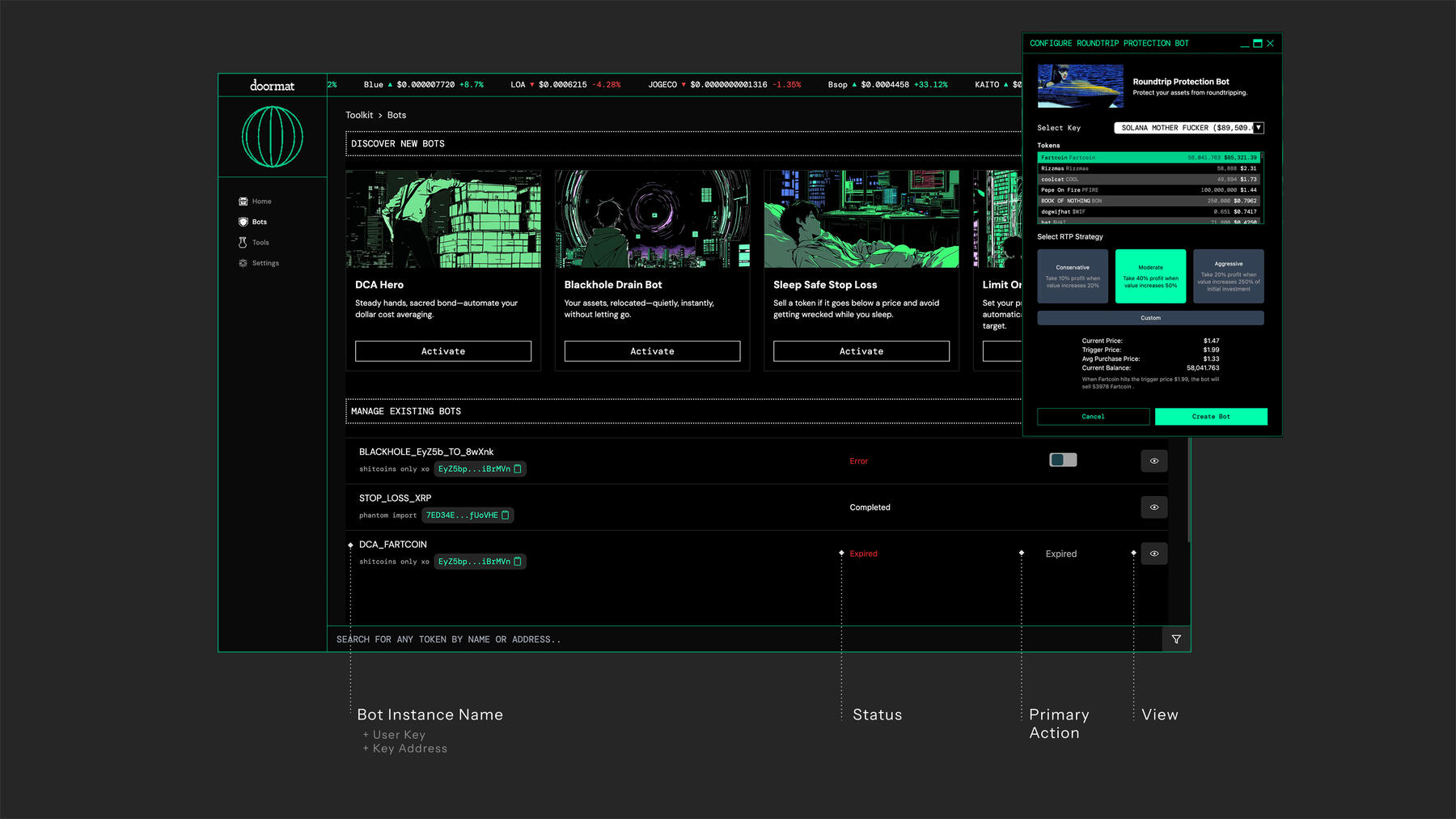
v1 focused on highlighting our KOL design partner's automation strategies and A/B testing bot configuration flows.
v2 and v3 focused on connecting the lifecycle in the same interface
Final Designs
Self-custody remained foundational, but the experience emphasized the benefit to structured participation in trusted strategies rather than emphasizing technical complexity.The final Automations interface centered on:
Clear capital allocation across chains
Explicit status indicators
Immediate pause / edit / exit controls
Structured discovery with creator context
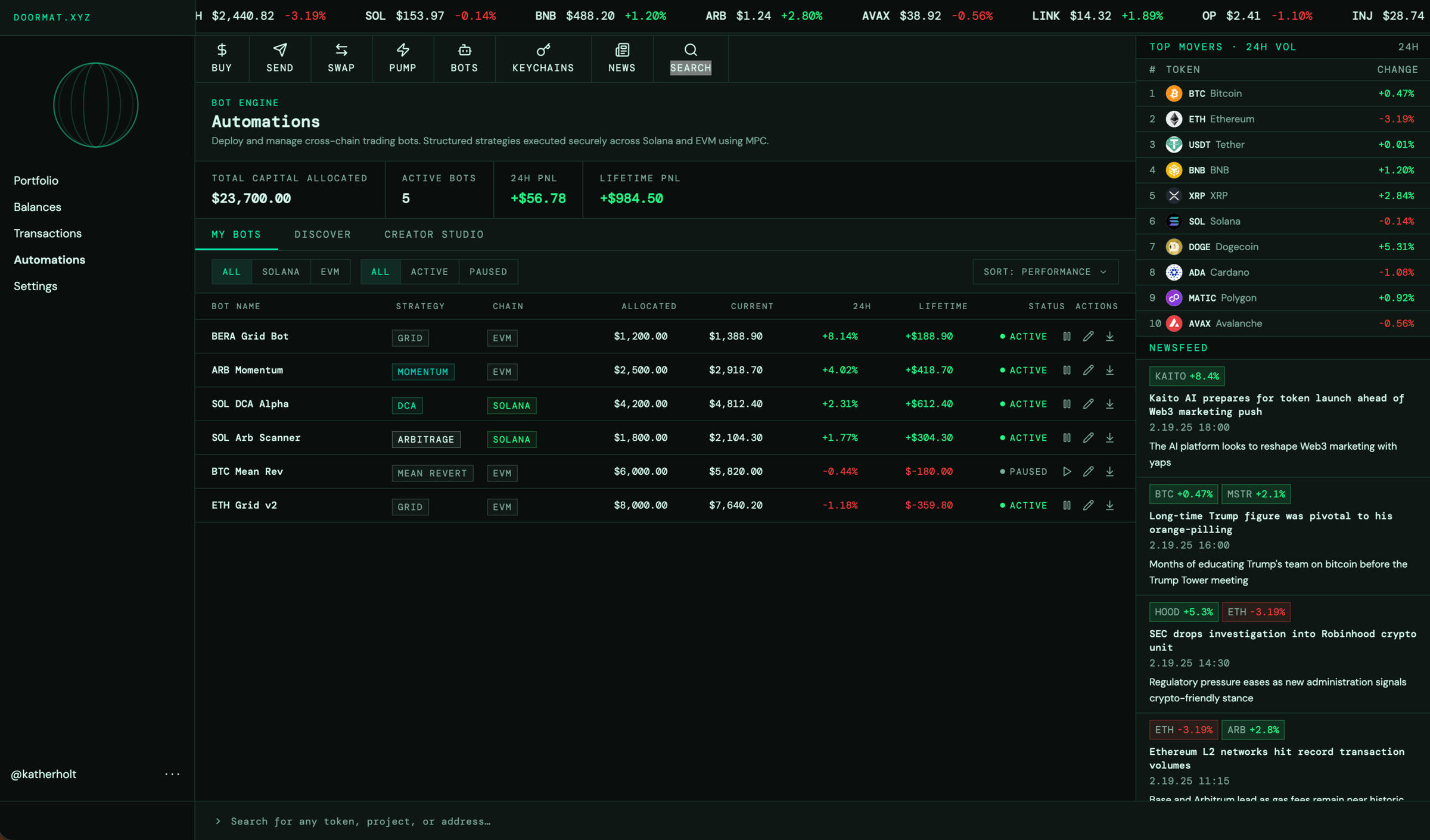
The v2 design increased scalability to prepare for more public access and style consistency across components
REFLECTION
Designing an automations marketplace inside a wallet required aligning creator incentives, maintaining high user trust, and working through technical constraints (like how to determine if a user could run multiple bots on the same key with no issue). The hardest problems were ensuring distribution and healthy marketplace design.Mapping loops early prevented us from overbuilding dashboards and kept the feature grounded in the copy-trading patterns we observed.
Katy is my ideal design partner. She balances strong vision with pragmatism and takes the time to understand how the system works end to end. She can hold two concerns that are usually in opposition - risk management and creative exploration - leading not just iterative improvements but qualitative redesigns based on what users actually want to do.She is curious, detail-oriented, and genuinely invested in improving both the product and those around her. Working with Katy was more than just a chapter of my career. It was a chapter of my life that I won't forget!
Abe Kim
SOFTWARE ENGINEER, DOORMAT
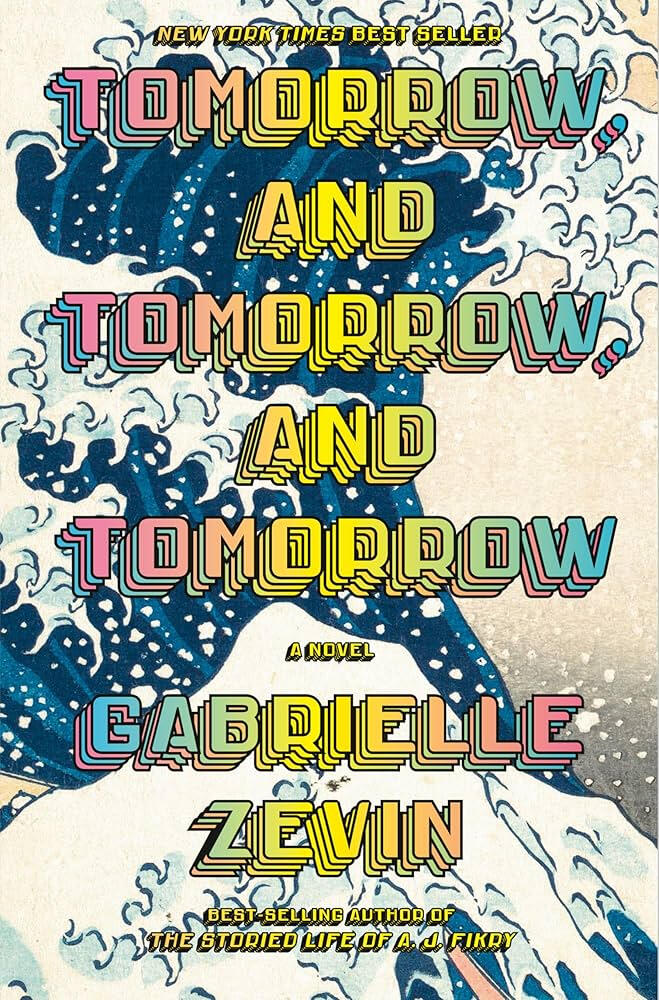
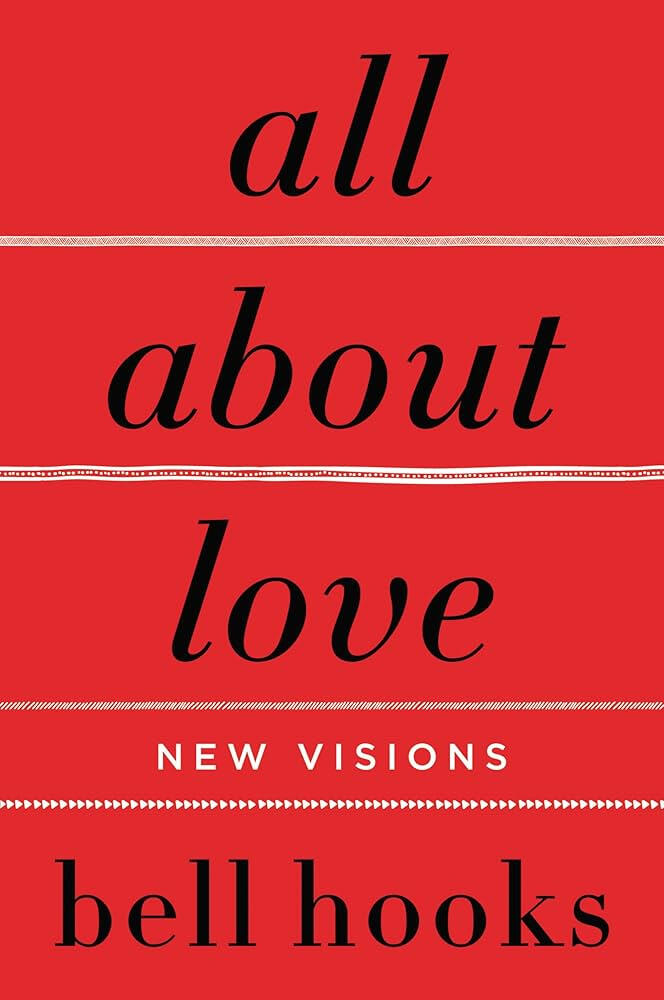
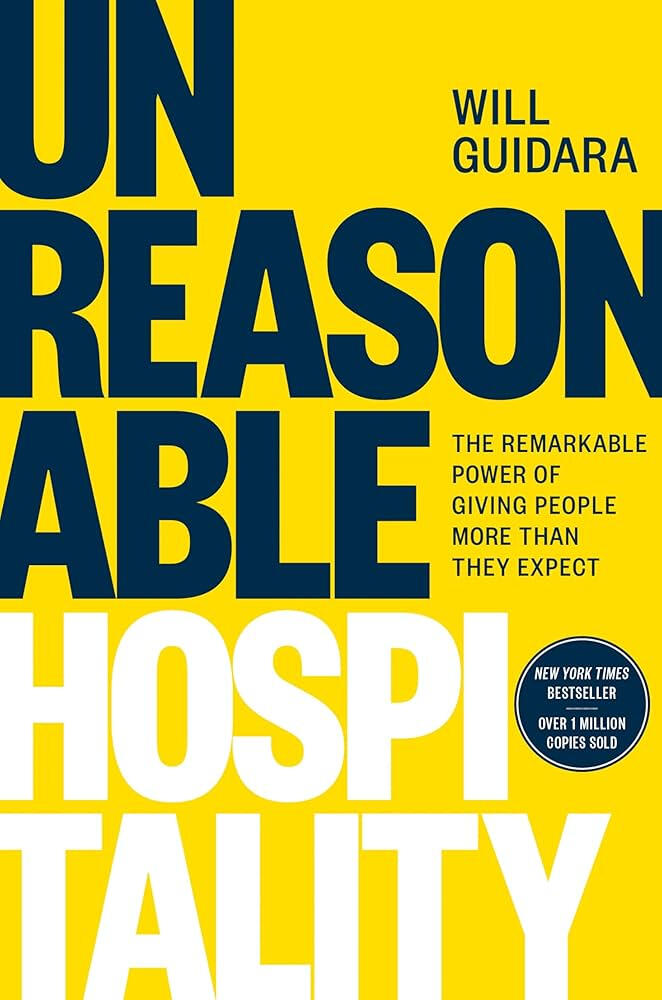
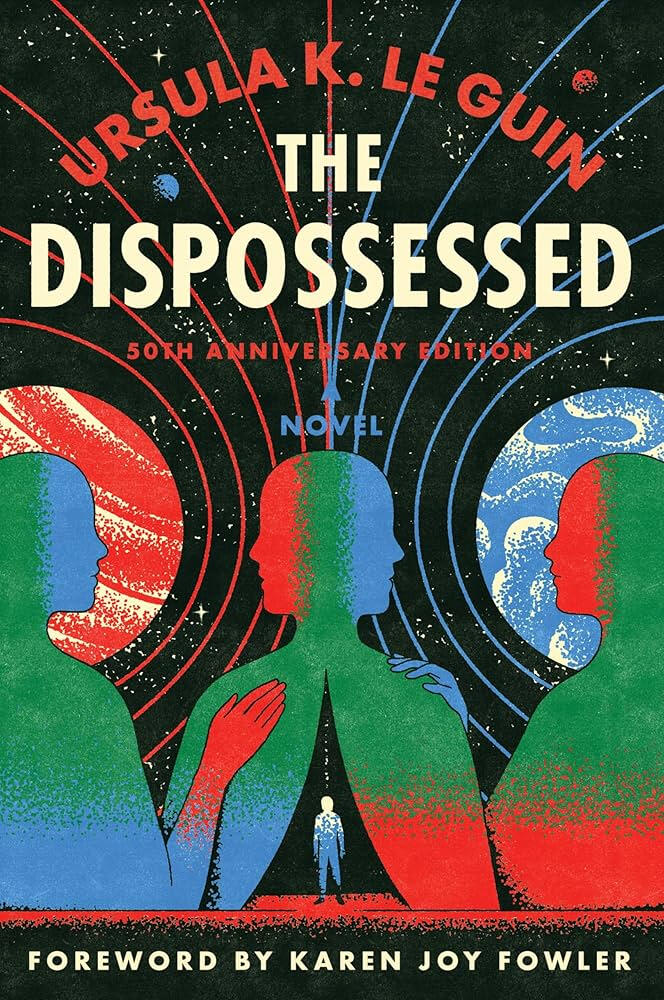
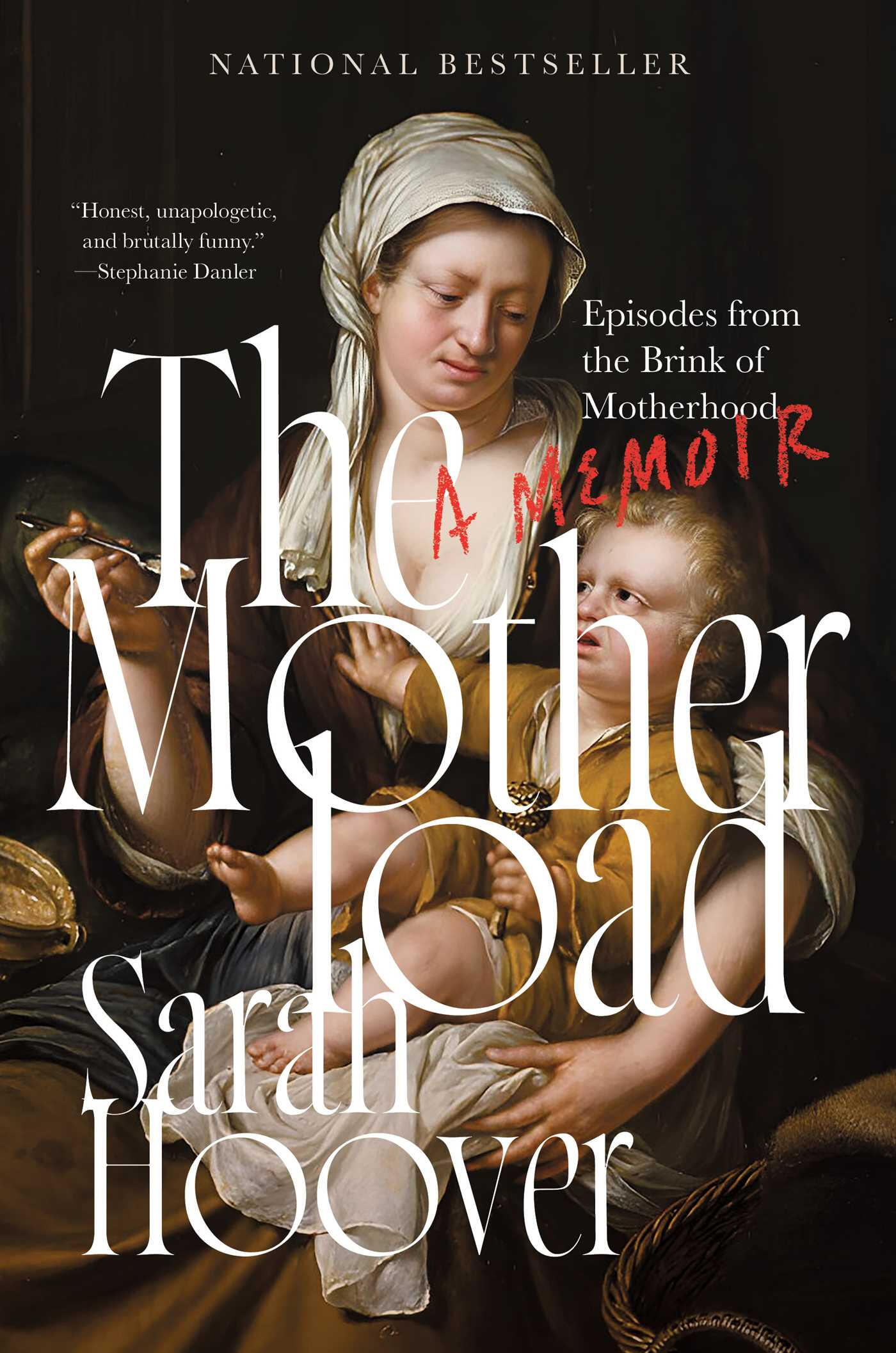
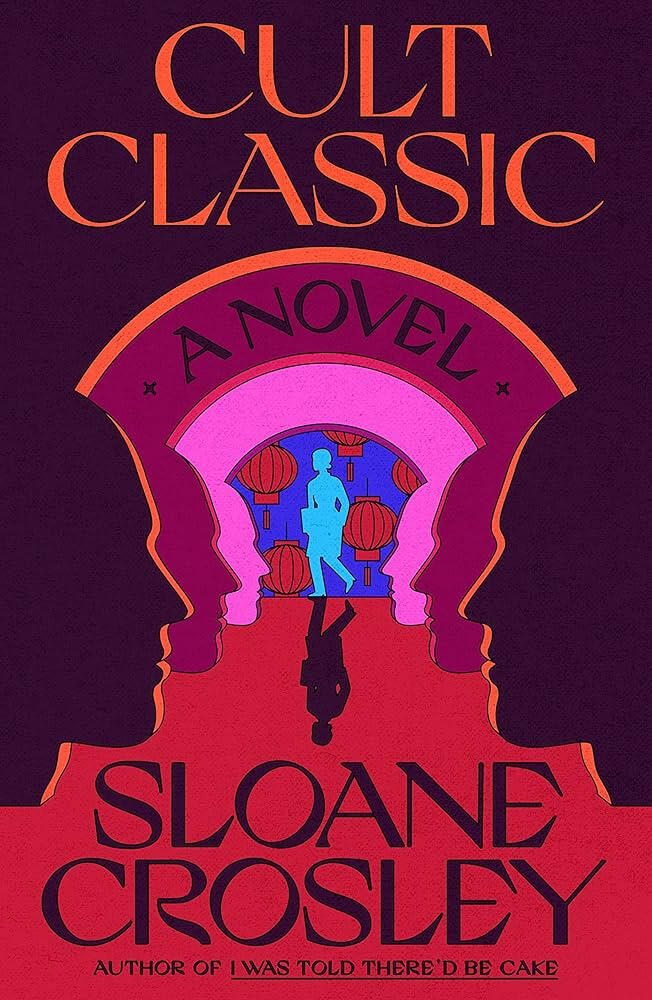
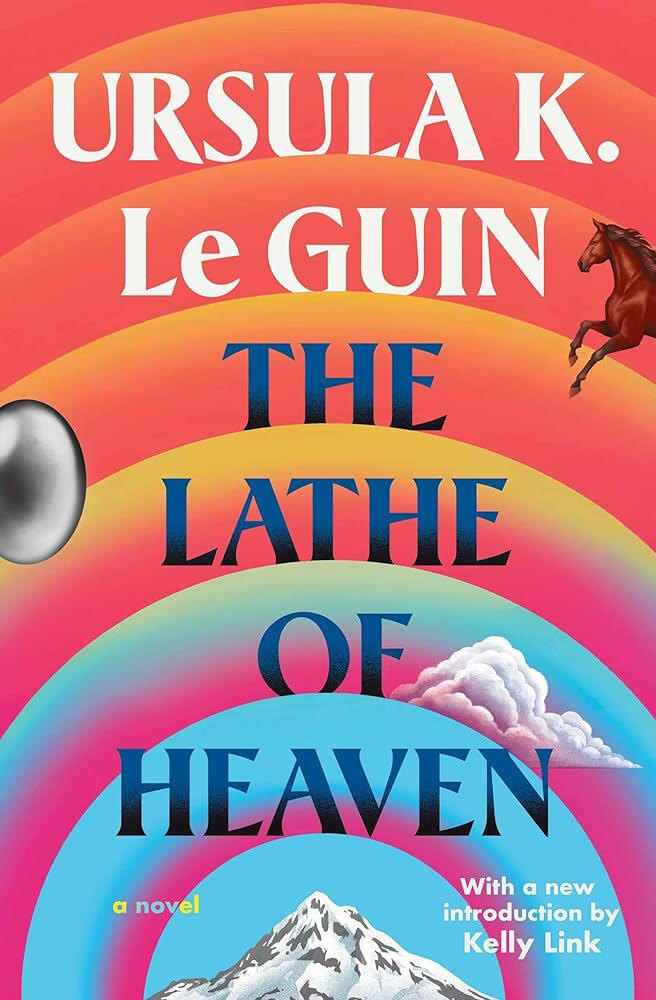
Welcome to my bookshelf!
This is a selection of books I've enjoyed over the past few years. I've been trying to read more fiction (sci-fi especially). Please share your recommendations below!
2026

2025






2024

2023